What if your piano students could give someone a song for Christmas?
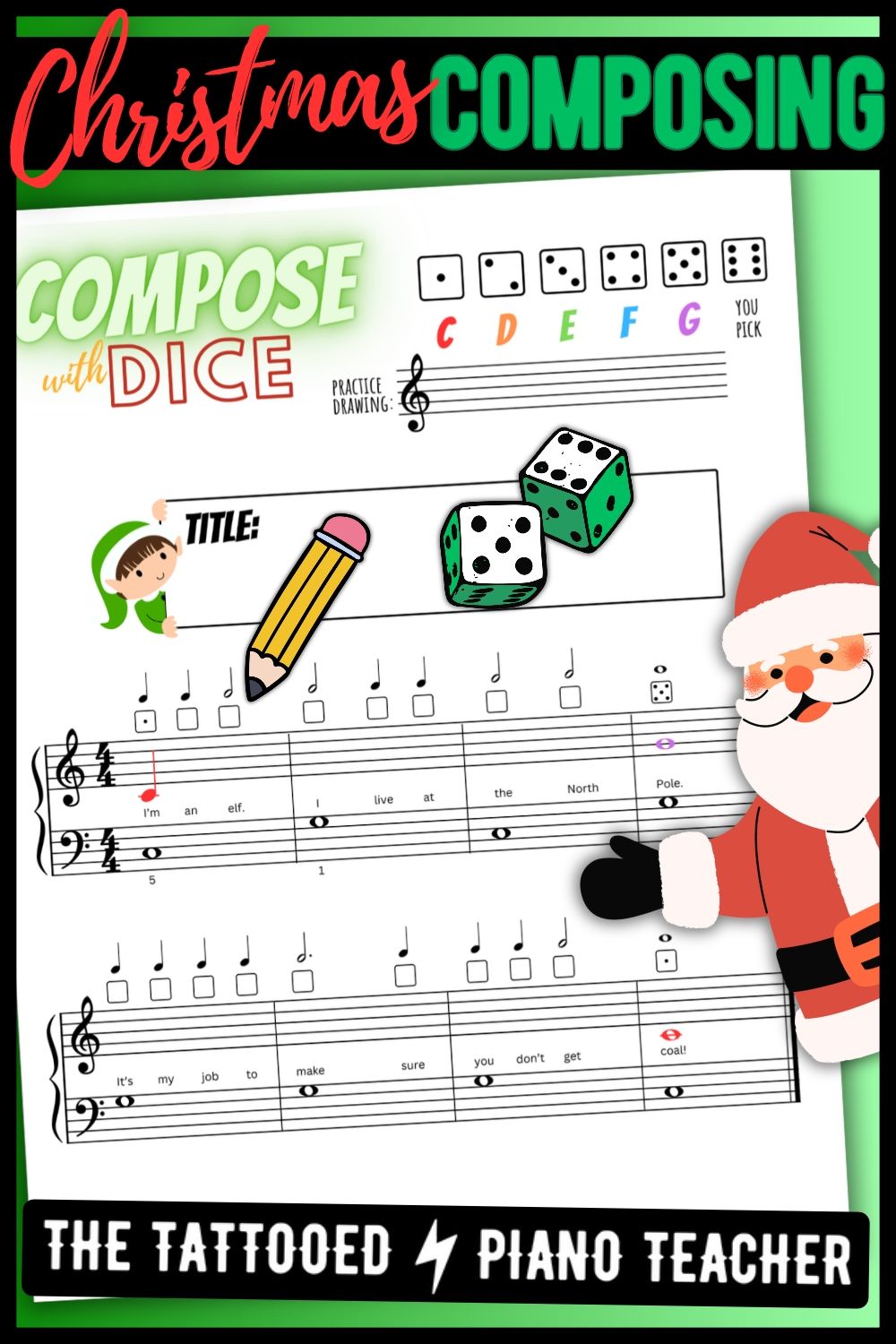
This Christmas composing activity helps beginning students create a little holiday song they can play for a parent, grandparent, or someone special. With Christmas Compose With Dice, students roll a die to choose melody notes, write them on the staff, and hear their song come together.
It’s a Christmas piano activity that combines note reading, writing, and creativity with the satisfaction of making something to share. Add a recording and a personal holiday greeting, and students have a musical gift their families can enjoy for years!
Start with Someone Special
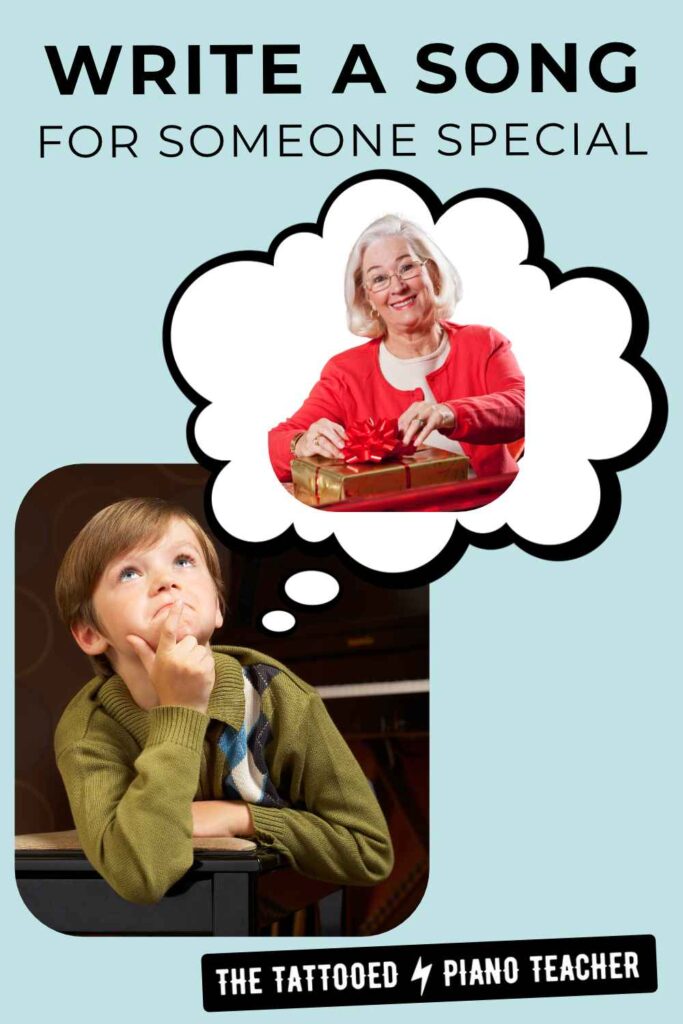
Before handing out the composing page, ask your student who might enjoy receiving a musical Christmas gift.
A parent? A grandparent? A sibling who lives far away?
Having someone in mind gives the project a personal purpose. Students can imagine that person listening as they work toward a finished performance.
You could even keep the project a surprise! Save the composing page in the student’s lesson folder until it’s ready to go home, or plan to record the song during a lesson.
How Does Compose With Dice Work?
Christmas Compose With Dice helps beginning piano students complete a short Christmas song by rolling a die to choose the missing melody notes.
Students aren’t starting with a blank staff. The composing page already includes Christmas lyrics, the rhythm, a simple left-hand accompaniment, and a few melody notes to guide the song. Their job is to fill in the remaining melody using notes from a major pentascale.
The Christmas set explores C, G, D, A, and F pentascales, so you can choose a page that fits what your student is learning.
How to Use Christmas Compose With Dice
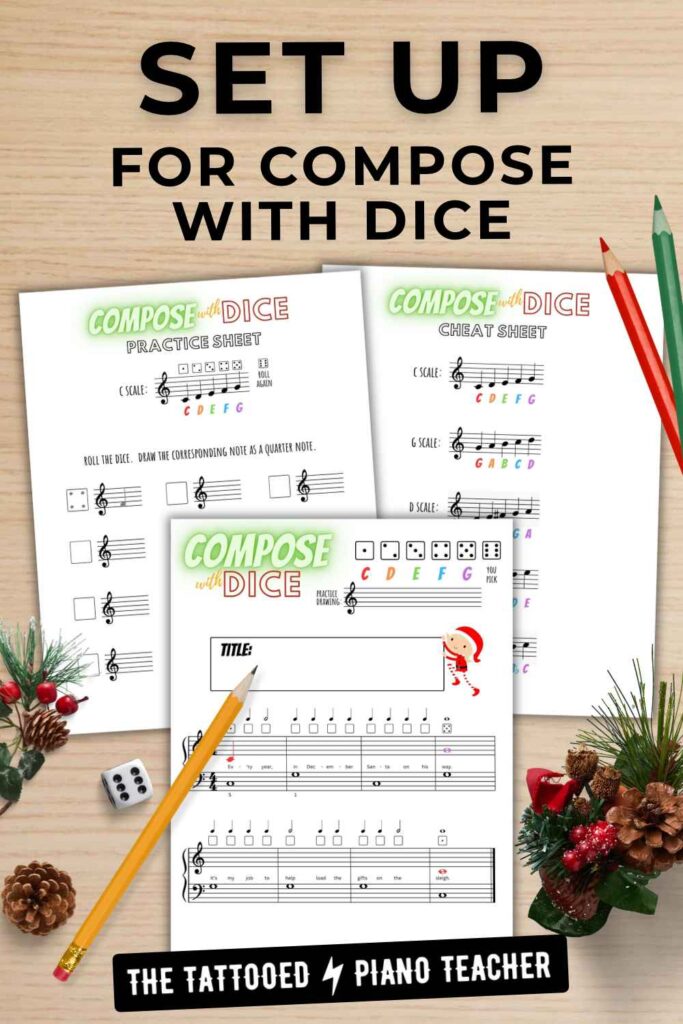
You’ll need the printable activity pages, a pencil, a die, and a piano.
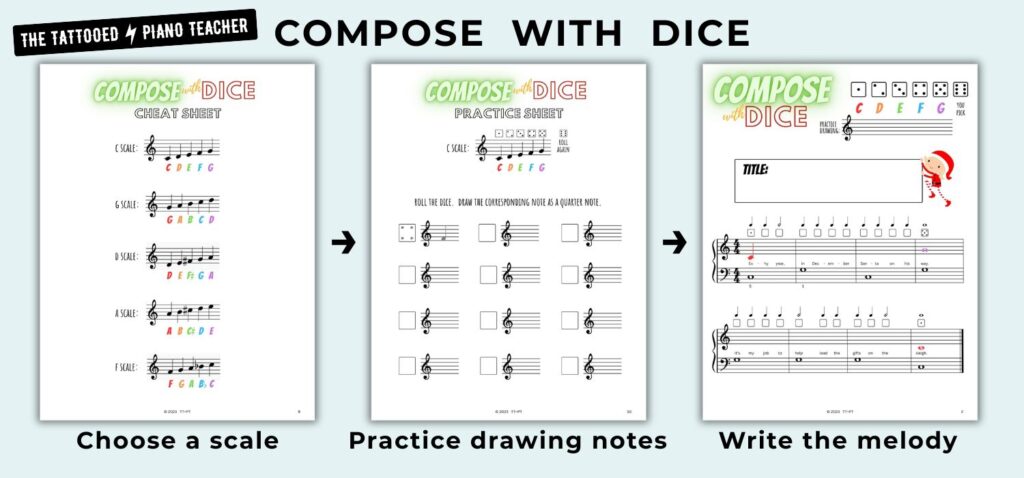
Choose a pentascale your student knows comfortably.
The Christmas set includes composing in C, G, D, A, and F major pentascales.
There is a scale reference sheet that shows all of the scales on the treble staff.
And there are two note writing practice pages for each scale (one with a reference chart at the top, and one without).
So, once you’ve chosen a scale to focus on, print the appropriate Practice Sheet.
First, Practice Drawing the Notes
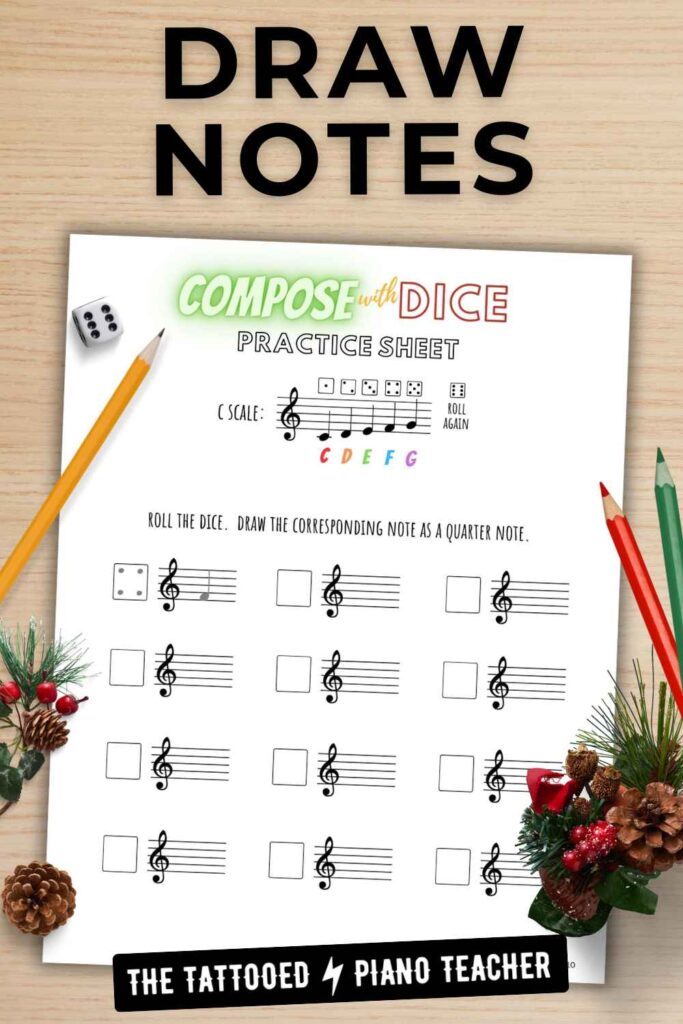
The included Practice Worksheets give students a chance to practice writing the notes they’ll use in their song.
Students roll a die, find the corresponding note, and draw it on the staff. Along the way, you can review line and space notes, stem direction, and any sharps or flats in the pentascale.
For a student who finds note writing difficult, lightly draw a note for them to trace. A student who is already confident may only need a few practice notes before moving on.
And note that younger students or students who are new to the scale can use the version of this sheet that shows a reference chart at the top. (Or for more of a challenge, print the version without the chart.)
Roll the Die to Complete the Melody
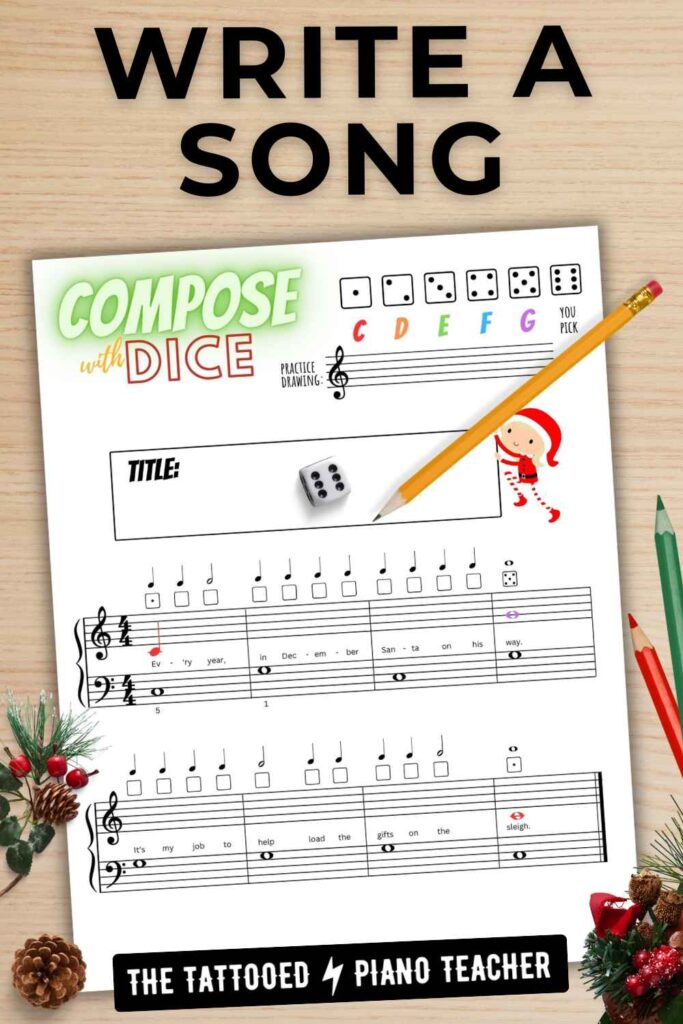
Next, introduce the composing page. Read the Christmas lyrics together and tap the rhythm given for the melody.
Students use the dice-to-note guide to determine each missing pitch. After rolling, they draw the corresponding note in the song, following the printed rhythm.
Roll a 1? Draw C.
Roll a 2? Draw D.
…Roll a 6? The student picks the note.
(Of course this is for the C scale. For the G scale, 1 = G, etc.)
So the dice chooses the pitch, while the page provides the rhythmic structure. Students can focus on finding and writing their notes without having to invent every element of a song at once.
Play the Song as It Takes Shape
After completing a couple of measures, move to the piano!
Have the student try the right-hand melody. You can sing along with the lyrics or demonstrate the melody first if they need help.
Then add the printed left-hand accompaniment yourself while the student plays the melody. Hearing their notes become a fuller piece gives them a reason to keep going.
Students who are ready can learn both hands together. Others can enjoy their finished song as a teacher-student duet.
Let Students Make Musical Decisions
The dice get the melody started, but students can still have a say in how their song sounds.
Once they’ve played a section, ask a few questions:
- Which part is your favorite?
- Is there a note you would like to change?
- Should this sound cheerful, peaceful, or mysterious?
- Where could the music get louder or softer?
Try their ideas at the piano so they can hear the difference before deciding.
This Christmas music composition activity is more than rolling and writing. Students get to listen to their work and make choices about the result.
They can also choose a title and add their name to the page. Leave time for those finishing touches!
Prepare the Song to Share
Once the composing is finished, help your student prepare a version they can play confidently.
The goal is a performance the student feels good about sharing. It doesn’t have to be perfect to be the perfect, heartfelt gift.
Turn the Song into a Christmas Gift
Now for the part that makes this Christmas piano activity special: presenting the finished music!
Record a Musical Christmas Greeting
Record the student playing their song, with a short introduction such as:
“Grandma, I helped create this Christmas song for you. Merry Christmas!”
An audio recording works well, too. The family can send it privately to the recipient, who can listen again whenever they like.
Give the Finished Music
Students can decorate a separate cover page with their song title, name, and a dedication.
Place the music inside a folder or a large envelope, ready for a Christmas performance at home. Include a note explaining that the melody was created through a dice composing activity.
That gives the recipient a little background and helps the student explain how the project worked.
Plan a Live Performance
Some students may prefer to play their gift in person.
Help them practice introducing the song, getting their hands ready, and taking a moment at the end before leaving the piano. Those little details can help the performance feel like a special occasion.
Spread the Project Across December Lessons
You can work on this Christmas composing activity a little at a time.
One possible plan is:
- First lesson: Choose the recipient, review the notes, and begin composing.
- Next lesson: Finish the melody, listen, and make any changes.
- Final lesson: Practice, record, and prepare the gift.
Adjust the pace to the student. Some will be ready to finish sooner, while younger students may benefit from completing just a small section each week.
Starting before the last lesson gives you time to enjoy the process without rushing to finish.
Try Christmas Compose With Dice
If you’d like to try this project with your students, my Christmas Compose With Dice pack includes eight-measure composing activities with Christmas lyrics, supporting note-writing worksheets, and color and black-and-white pages.
You can also find a free, nonseasonal sample in my original Compose With Dice blog post if you’d like to try the process first.
A familiar Christmas song is always fun to share. But a song the student helped create, complete with a personal greeting and a dedication, gives them something especially meaningful to put under the tree.

Looking for Christmas Piano Sheet Music?
And of course, you’ll want some familiar tunes to perform as well!
Whether you’re looking for simple arrangements for beginners or something a little more challenging for your advancing students, there are plenty of wonderful Christmas pieces to explore.
I’ve put together a separate roundup of Christmas piano sheet music to help you find just the right holiday repertoire for your students.
Read next: Christmas Sheet Music for Beginners