Every piano teacher knows the feeling.
A student returns after summer break and sits down at the piano ready to play. They remember where Middle C is. They remember a few note names. They might even remember most of their favorite pieces from last spring.
But then you ask them to identify a simple interval on the staff and suddenly you’re getting a blank stare.
That’s why one of the first concepts I review every fall is intervals.
In fact, I spend far more time reviewing intervals than most method books seem to recommend. While it might be tempting to jump straight into new repertoire, I’ve found that taking a few weeks to reinforce interval recognition pays off enormously throughout the rest of the year.
My advice? Spend the first week of September (or whenever your region starts school) reviewing intervals with every student!
Why Intervals Matter So Much
When students first learn to read music, they’re often focused on identifying individual notes.
“What note is this?”
“What note comes next?”
While note naming is important, strong readers eventually learn to recognize patterns instead of individual notes.
That’s where intervals come in.
Students who can instantly recognize a step, skip, 4th, or 5th are able to process music much more quickly. Instead of reading note-by-note, they begin reading relationships between notes.
This not only improves note reading, but also helps students become stronger sight readers.
Why I Focus So Much on 2nds and 3rds
If you’ve ever browsed my music theory resources, you’ve probably noticed that I have an entire worksheet pack devoted almost exclusively to 2nds and 3rds.
At first glance, that might seem like overkill.
After all, once students understand steps and skips, shouldn’t they be ready to move on?
In my experience, not quite.
Students who develop a solid understanding of 2nds and 3rds tend to have a much easier time understanding larger intervals later on. They recognize patterns more quickly, read music more confidently, and generally require less remediation down the road.
On the other hand, students who rush through these foundational concepts often struggle when intervals become more important in their repertoire.
That’s why I believe repetition is worth it.
And honestly, most method books simply don’t provide enough review.
My Favorite Way to Review Intervals
The key to successful interval review is variety.
If students spend an entire month filling out identical worksheets, they’re going to get bored.
Instead, I like to rotate between written activities, games, and hands-on review.
1. Build a Strong Foundation with 2nds & 3rds Worksheets
When introducing interval review, I almost always begin with 2nds and 3rds.
These intervals are the foundation for everything that follows. Students who confidently recognize steps and skips tend to have a much easier time identifying larger intervals later on.
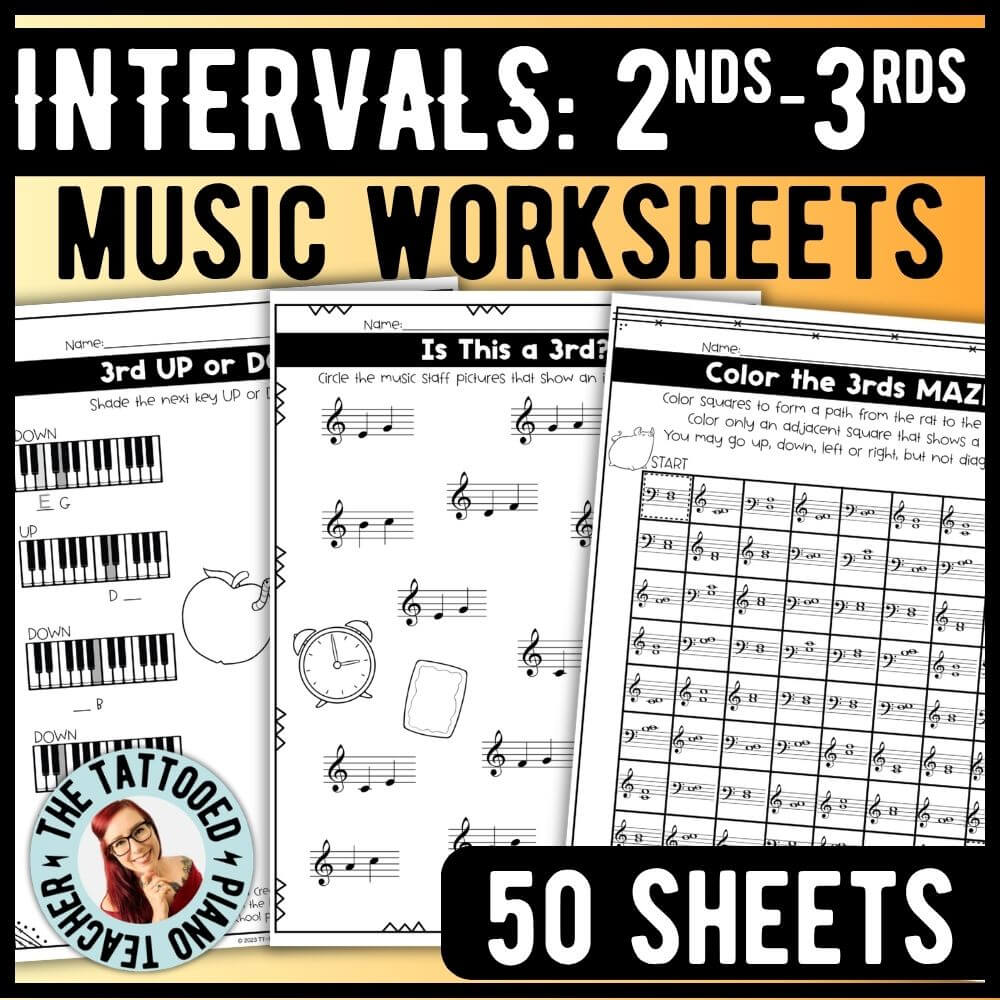
My 2nds & 3rds Worksheet Pack includes activities for identifying, matching, drawing, and reviewing intervals on both the piano keyboard and the staff. There are also mazes, color-by-code activities, and review pages that provide plenty of repetition without feeling repetitive.
I also have matching worksheet packs for 4ths & 5ths and I sell all of them in a bundle as well.
2. Review All Intervals with Back to School Worksheets
Once students demonstrate confidence with 2nds and 3rds, I like to broaden the review.
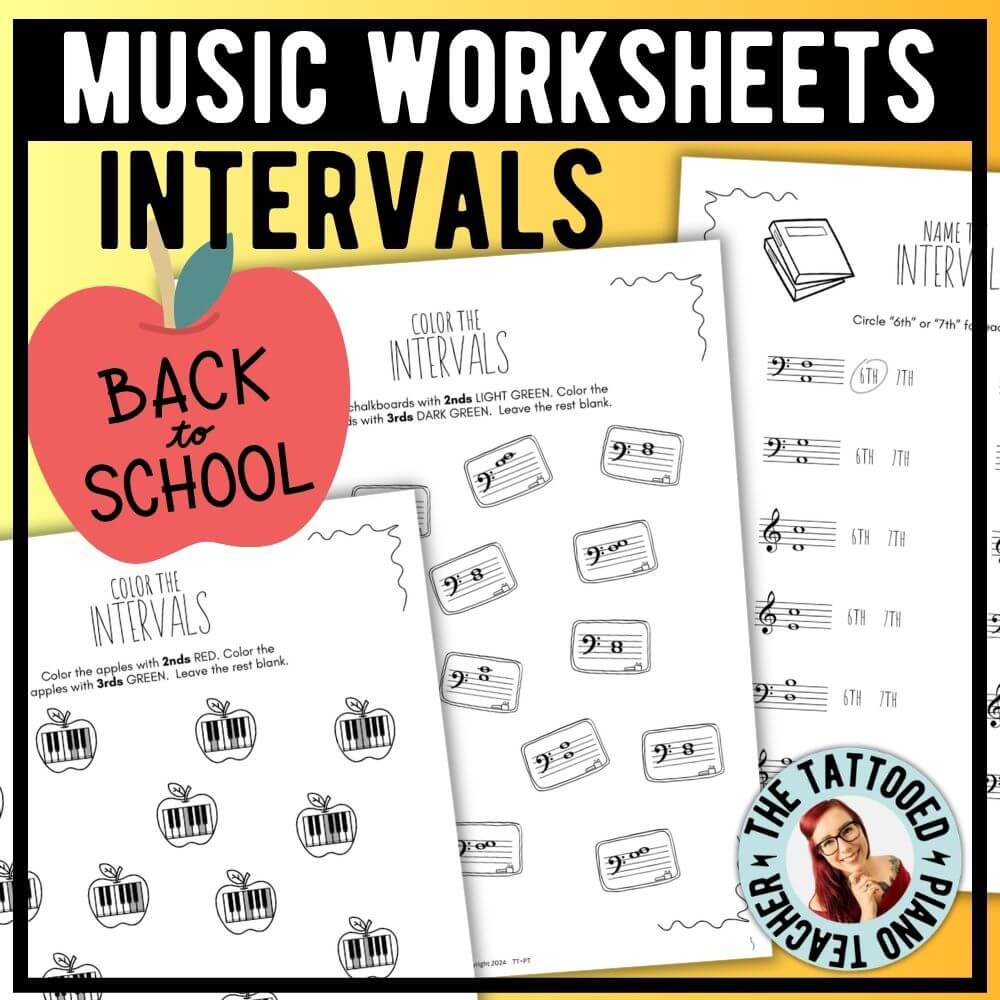
My Back to School Interval Worksheets cover intervals from 2nds all the way through octaves. Students practice identifying intervals on the keyboard and the staff while reviewing both treble and bass clef note reading.
I often use these worksheets as a quick assessment at the beginning of the school year because they help me identify exactly which interval concepts need additional review.
This back to school interval-focused worksheet pack is part of a extensive seasonal worksheet series. If you need worksheets on a particular theory topic, chances are…I’ve got it!
3. Make Review Fun with Interval Bingo
Worksheets are useful, but sometimes students need a break.
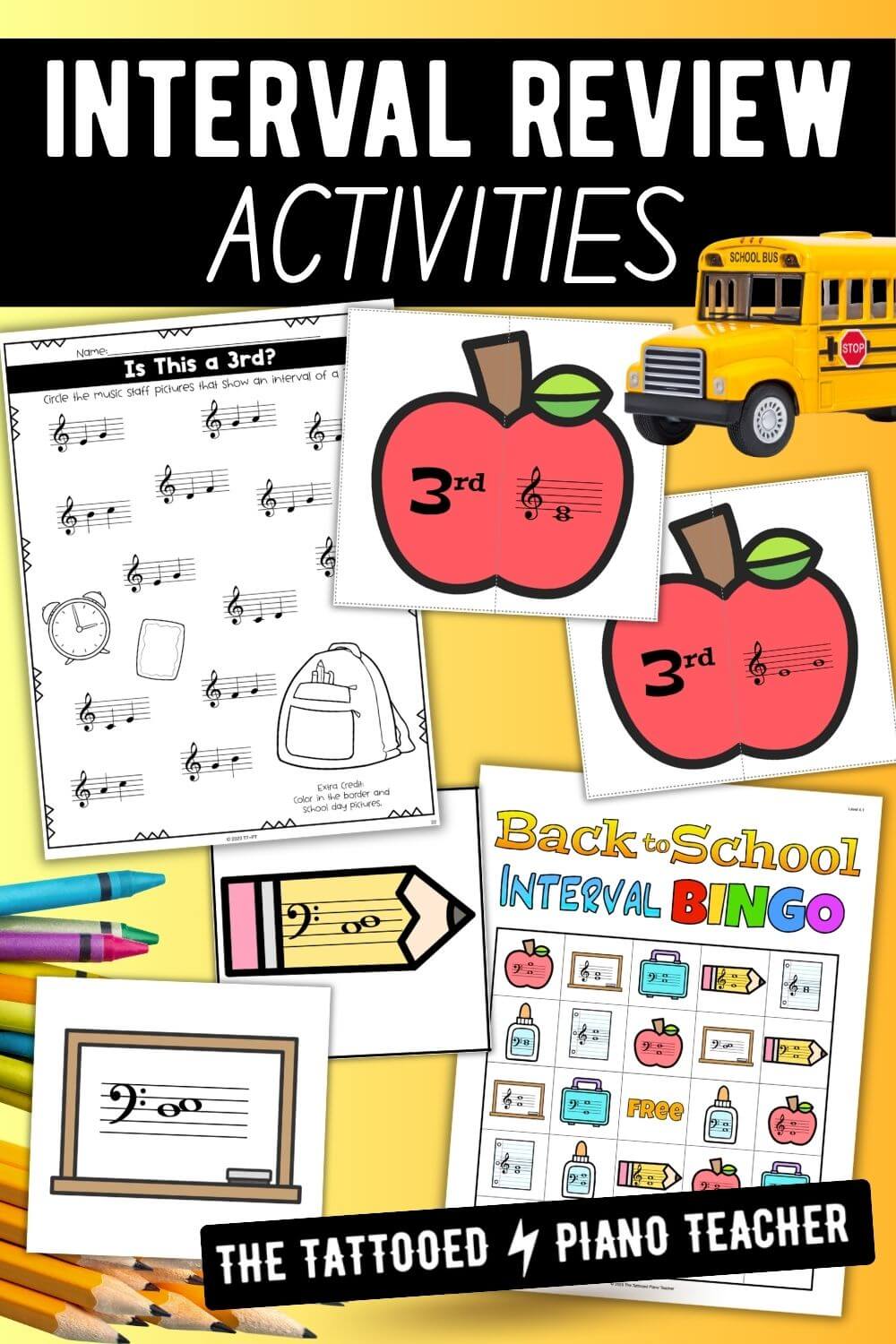
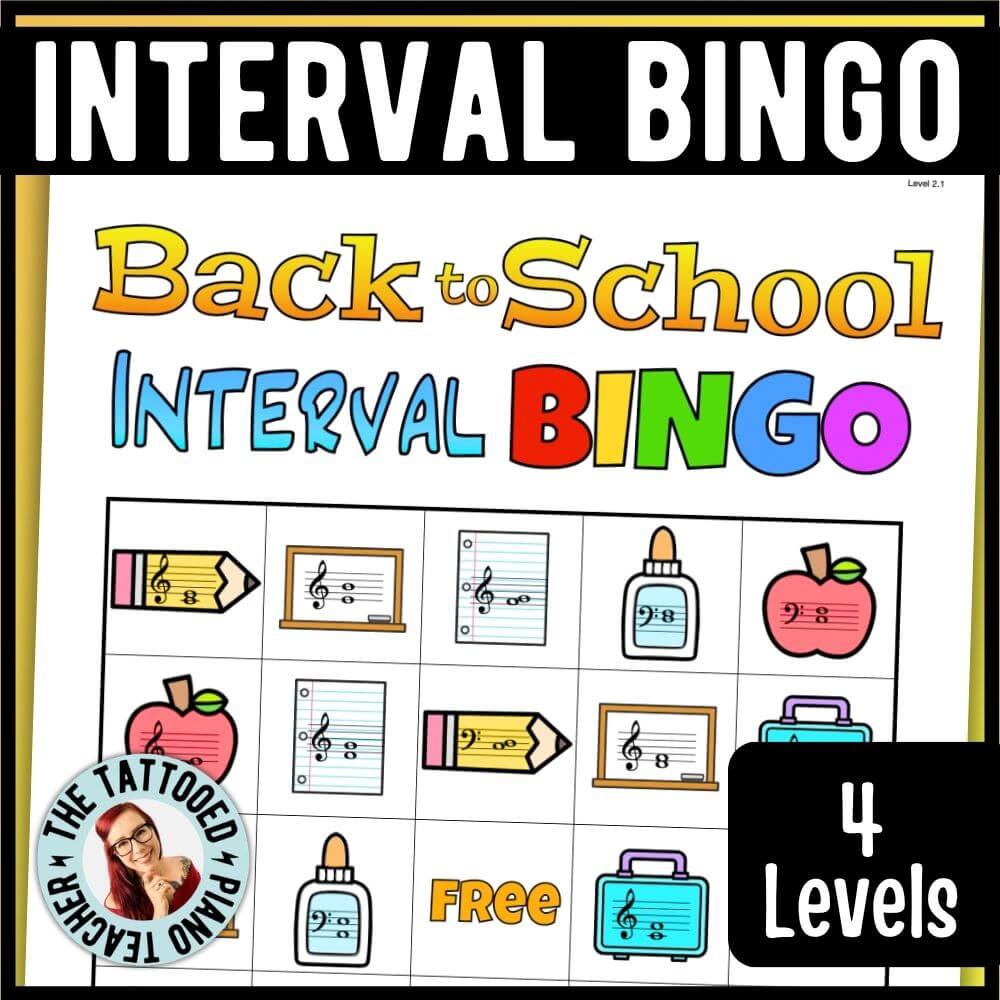
Back to School Interval Bingo transforms interval identification into a game. With four levels included, it’s easy to adapt for beginning students who are just learning steps and skips as well as more advanced students reviewing intervals through octaves.
Four different levels are included so you can pick the bingo boards that are perfect for your students. And each level includes six unique boards, so you can play in small group settings.
My students love bingo so much, I also created a Rhythm Bingo game and a Note Bingo game, too!
4. Replace Flashcards with Interval Puzzles
Not every review activity needs to involve paper and pencil.
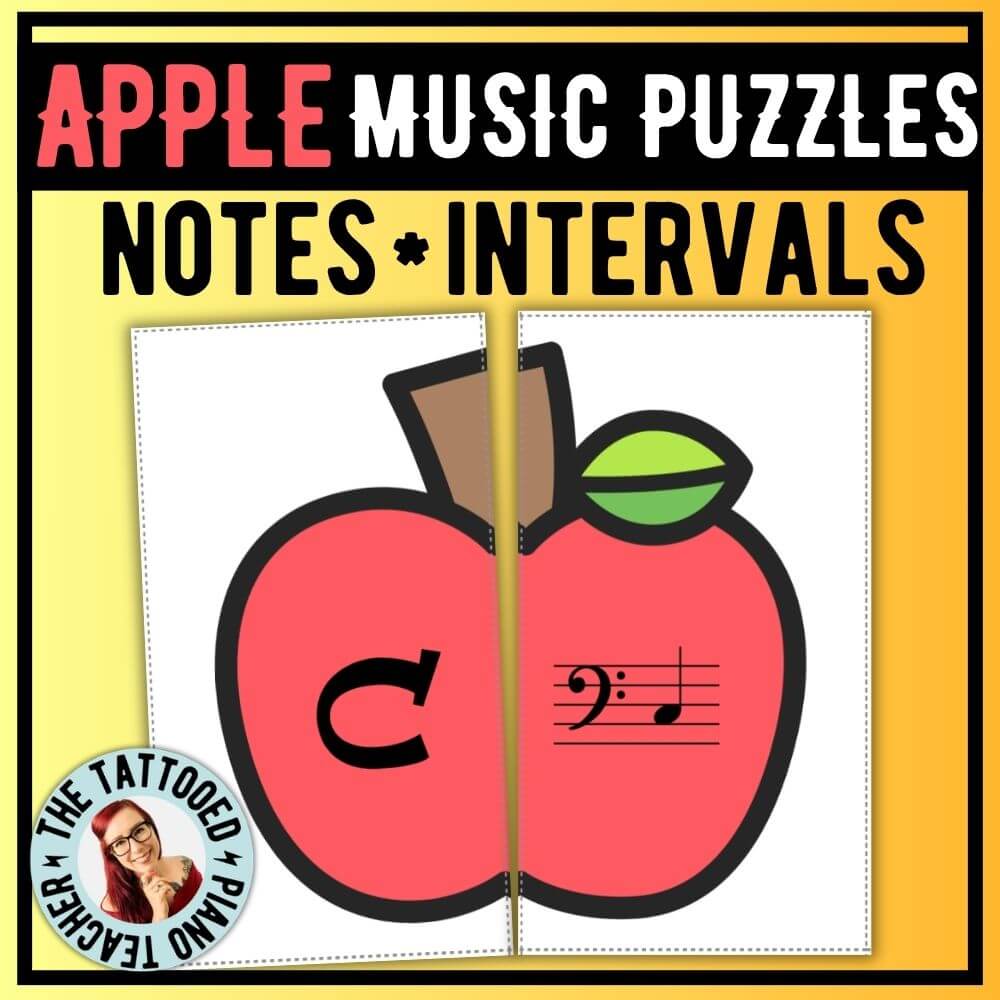
These back to school apple puzzles give students a hands-on way to practice interval recognition. I often use them as independent work, early-arrival activities, or a quick review station during group lessons.
Students usually think they’re solving puzzles, but they’re actually getting valuable interval practice.
This puzzle pack also includes piano keys, notes, and dynamics/symbols.
Interval Review Doesn’t Have to Be Boring
I know interval review isn’t the most exciting thing on a student’s back-to-school checklist, but I’ve learned not to rush through it.
Over the years, I’ve noticed a pattern. Students who have a solid understanding of intervals tend to become stronger readers, stronger sight readers, and more independent learners overall. Students who are shaky on intervals often struggle later when music becomes more complex.
That’s why I like to spend the first few weeks of the school year revisiting these concepts. Not with endless drills, of course! A mix of worksheets, games, and puzzles keeps the review from feeling repetitive while still giving students the practice they need.
A little extra interval review in September pays off all year long.