When I started teaching piano, I made plenty of mistakes. Some were expensive. Some were stressful. Some were simply the result of not knowing what I didn’t know.
The good news is that you don’t need to make all the same mistakes I did.
If I woke up tomorrow and had to start my piano studio from scratch, there are several things I would absolutely avoid, and a handful of things I’d prioritize right away.
Whether you’re opening your first studio or looking to grow the one you already have, here’s what I’d do differently.
What I Would NOT Do
1. I Wouldn’t Rush to Fill My Schedule with 25 Students
When you’re new, it’s tempting to say yes to every inquiry that comes your way.
Why This is a Mistake: You’ll end up with a schedule that doesn’t fit your life, students that aren’t the right fit, and…bring on the overwhelm!
Instead, I’d focus on building slowly enough to develop good systems, strong teaching skills, and clear policies. A full studio isn’t nearly as enjoyable if you’re drowning in administrative work and constantly putting out fires.
If you have a flood of inquiries, that’s great! You can still take those inquiries. Set up a new student’s first lesson for two months out, for example. Or take down their ideal time and start date and tell them you’ll reach out next month.
My Advice: Start with 1-3 students for a few months. Then add on 1-2 students per month from there.
2. I Wouldn’t Rent a Studio Space Right Away
A dedicated teaching space sounds exciting, but it also comes with overhead.
Why This is a Mistake: Commercial space is expensive! You don’t need to look like a seasoned, polished business storefront to teach your first student. Start small and plan for growth later on.
If I were starting over, I’d keep expenses low until I had a stable student base and predictable income. Many successful teachers start from home or travel to students before investing in commercial space.
My Advice: Your studio should start in your home. Start small and plan for growth later on.
3. I Wouldn’t Spend a Fortune on a Grand Piano
I was embarrassed of my digital piano when I started teaching. It didn’t even have a matching bench. It was a few years old and not the “upright piano”-looking digital pianos I saw other teachers using. I swallowed my pride and taught for over a year saving up for the digital piano I really wanted.
Why This is a Mistake: Don’t start your business with a huge investment (or worse, debt)!
The truth is, students sign up because of the teacher, not because of the instrument. A decent digital piano or upright is more than enough to get started.
My Advice: Start with what you have!
4. I Wouldn’t Charge Dirt-Cheap Rates
One of the biggest mistakes new teachers make is assuming low prices will help them attract students.
While this is true in the short-term, starting with well-below average rates will bite you in the end.
Why This is a Mistake: Raising rates significantly later on is…awkward and can be a turn-off for current students. You also might end up attracting less-than-ideal customers who pay late, don’t pay, don’t show up, don’t take it seriously, etc. And “special pricing” or discounts can be messy down the road…trust me, I have stories!
In reality, low prices often lead to burnout, make future price increases difficult, and can unintentionally attract families who don’t value lessons.
My Advice: Start right at your region’s average rate or just slightly below.
5. I Wouldn’t Try to Teach Everyone
The best way to get better at teaching is to focus on one “type” of student, generally speaking.
In other words, don’t immediately take on a four-year-old beginner, an 85-year-old guitarist, an Intermediate-level high school senior, and an 11-year-old transfer student who hated their last teacher.
Why This is a Mistake: Different students have different needs and if you’ve never taught before it can be overwhelming to try to master all of these paths at once with no experience!
You don’t have to turn away every student outside your “niche,” but having a specialty helps families understand why they should choose you.
My Advice: Target one type of student to begin with. The easiest to start as a teacher? Age 7-9 brand new beginners.
6. I Wouldn’t Obsess Over Social Media
New teachers want that “established studio” public look right away. I get it. You want to be an official business! But showing up consistently on all the platforms isn’t the way, my friend.
Why This is a Mistake: The ratio of time spent posting everywhere daily to new student interest is just not worth it in the beginning.
If I were starting today, I’d spend more time building relationships, asking for referrals, creating a website, and getting listed on Google than worrying about Instagram engagement.
My Advice: Focus on a simple website and a Facebook business page with a few photos, videos, and posts to start.
7. I Wouldn’t Script Every Minute of Every Lesson
When I first started, I obsessed over preparation. I was terrified of running out of things to do in a lesson! Or looking like I was fumbling in front of a parent.
There’s nothing wrong with preparation. But when you dictate every second of a lesson before it begins, you remove the personalization that makes one-on-one piano lessons so valuable.
Why This is a Mistake: Scripting every moment of a lesson can rob you and your student of a truly creative, fun, and personalized experience.
While lesson planning is important, flexibility is even more important. Great teaching happens when you’re responding to the student in front of you, not just following a script.
My Advice: Plan as much as you need to to feel ready. Have a Plan A, a Plan B…but then in the lesson, go with the flow! Settle on 2-3 solid “just in case” music activities that you can fall back on anytime you have five minutes left to fill.
Now, that being said, I do have done-for-you lesson plan templates! These can be a great starting point for planning a lesson for a beginner if you’ve never done it before. Just remember to be flexible within the lesson. 😉
8. I Wouldn’t Buy Every Teaching Resource Immediately
There are thousands of method books, games, courses, and printables available.
Why This is a Mistake: All of those $10 books really add up! Yes, you want to try out different methods and resources, but make sure you’re not spending your new business’ funds frivolously for students you don’t have yet.
I’d start with a few solid resources and expand my library as specific needs arise.
My Advice: Research by looking at previews online, watching review videos or reading review blog posts (I have a ton!), and settle on 2-3 main method books that look good for your incoming student. Return any that just don’t seem like a good fit.
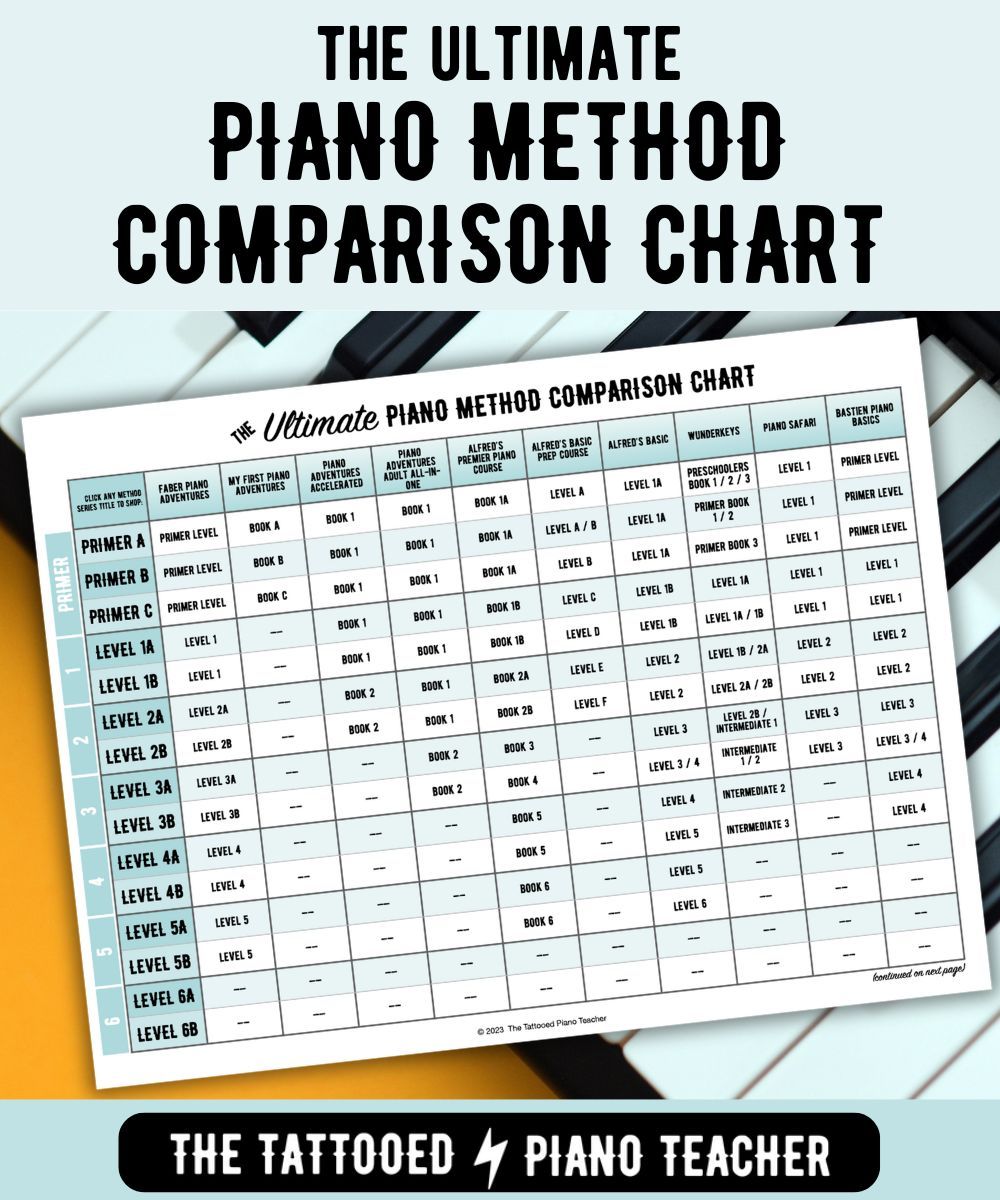
And if you want some more guidance and which method books align with your unique philosophy and style of teaching, check out The Complete Piano Teacher’s Kit, which includes a quiz that will reveal your ideal method series!
9. I Wouldn’t Build My Studio Exactly Like Someone Else’s
It’s easy to look at successful teachers and assume their way is the right way. Or think that they’ve just always had it all together. From someone who’s been teaching for 20+ years I can tell you..they didn’t always have it together!
Why This is a Mistake: Trying to replicate another studio/teacher’s success can be discouraging (because they’re in a different place in their journey than you) and misleading (because they probably have different experiences and needs than you).
Your ideal studio depends on your goals, schedule, personality, students, and teaching philosophy.
My Advice: You don’t have to figure it all out today. Or even this year! Start where you are. Build from there.
What I WOULD Do
1. I Would Start Before I Felt Ready
The truth is, most of us learn how to run a studio by running a studio. We learn how to be a good teacher by teaching.
Even after a piano performance degree and over a year coordinating lessons for 22 piano teachers at a music store, not to mention 15 years of piano lessons myself…guess what? I still felt so unprepared to teach my first lesson.
And then, after teaching in a music store for a few years and working behind the scenes to see how studios run…guess what? I still felt unprepared to book my first student at my new independent home studio.
Why This is a Important: You can make excuses for years and never start. You’ll never feel fully ready, no matter what you do.
I’d get my first student, teach my first lesson, and improve along the way instead of waiting for everything to be perfect.
Real Life Advice: Pick three things you want to learn/do/get/finish before teaching your first lesson. Only three. No more. Pick a date when you will complete this goal. Then book that first lesson!
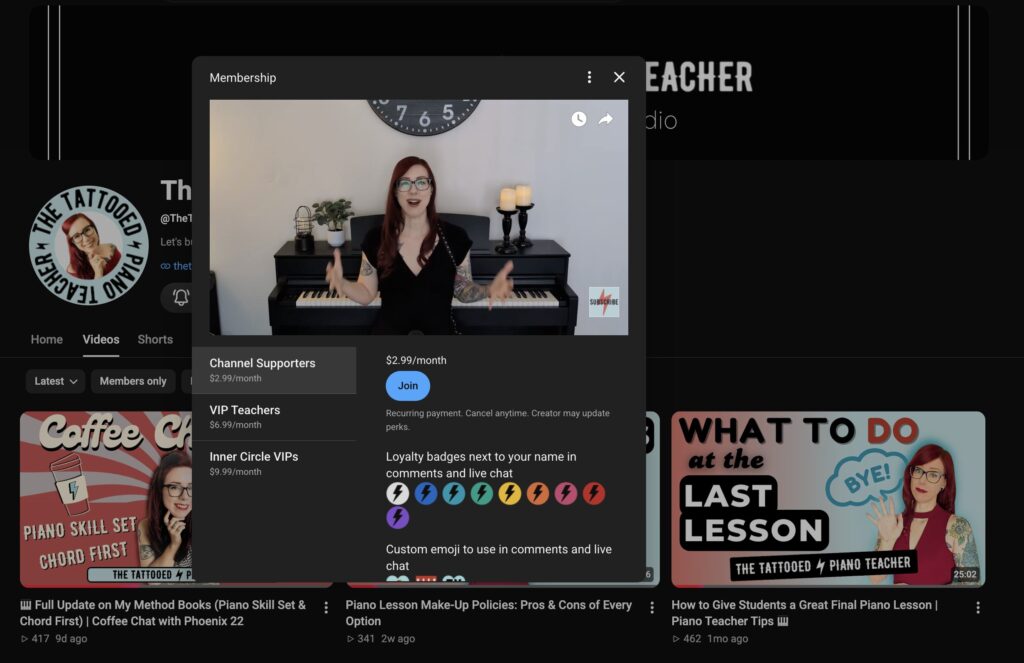
And, hey, if you want some real live support…I’m here! The piano teacher community over at The Tattooed Piano Teacher is here! You can book a call with me. You can join the membership on the YouTube channel and watch me teach my lessons. You can grab the Complete Piano Teacher Kit. You have resources. You’re not alone!
2. I Would Choose a Niche Earlier
A niche ultimately helps guide your marketing, curriculum choices, and studio culture.
Why This is a Important: If you try to teach all things to all people, you will feel stressed and stretched as a new teacher.
Now, you don’t have to know exactly what you want right away, especially if you’ve never taught before.
But if you know you love teaching kindergarten-aged students or you have training with that age group–do that!
If you worked at a nursing home and have a passion for bringing a smile to retirement-age folks’ faces–teach returning/beginning adults!
If you played in a jazz combo and have a knack for improv–lean into that!
Whether it’s beginners, adults, homeschool students, preschoolers, or recreational learners, clarity makes growth easier.
Real Life Advice: If you don’t have an age group, style, or preference in mind because you simply haven’t worked with students before, stick to beginners in the 7-10 age range. In my opinion, they are the easiest to teach as a brand new teacher and most of the method books are automatically geared towards that age group.
3. I Would Charge More from the Beginning
Not because teaching is about money, but because a sustainable studio requires sustainable pricing.
Why This is a Important: Treating your business like a business from Day One is key. Not to mention, starting with super low prices and then trying to raise them significantly later is an awkward situation.
Your rates should support your time, training, preparation, expenses, and long-term goals.
Real Life Advice: Research the range of 30-minute private lesson prices in your town/city/region. What’s the lowest? What’s the highest? What are most people charging? Aim for the middle or lower end to start. Plan for small, incremental annual (or every two years) raises as you gain experience and clout.
4. I Would Create Strong Policies on Day One
Clear policies prevent misunderstandings and reduce stress.
Why This is a Important: If you hate confrontation as much as me, take my advice: Let your Policies be the “bad guy” so you (hopefully) don’t have to!
I’d have tuition, makeup lesson, attendance, communication, and payment policies established before accepting students. This doesn’t mean you won’t refine your policies over time. But don’t start on a wing and a prayer!
Real Life Advice: I know it’s hard to know what needs to go into your policies and what isn’t necessary. In the Complete Piano Teacher Kit we go over every possible scenario, parse out what matters most to you and your studio, and put together solid policies from the get-go.
If you’re not ready for the full kit just yet, I do have a Policies template just to see one possible layout and wording to get you started (it’s free).
5. I Would Try a Recital Sooner
I talked myself out of hosting a recital for years as a new piano teacher. I felt intimidated by the planning and exposure. I liked hiding in my little practice room in the corner of the music store.
Why This is a Important: I cannot overemphasize the importance of recitals to keep kids engaged and keep parents enrolled up year after year. It’s one of the most powerful retention tools a music studio possesses.
Looking back, I wish I’d started earlier. Even a small, informal recital can motivate students, build community, and create memorable experiences.
I still find recitals to be a bit of a burden, but always, always so very worth it.
Real Life Advice: I have an article and video about stress-free recitals and a free checklist to help you plan your first (or next) recital!
6. I Would Sign Up for MyMusicStaff Earlier
I started with hand-written invoices and personal checks as payment. My lesson notes were scribbled on a scrap piece of paper. My lesson schedule and who-still-needs-to-pay list literally lived in my head.
When I signed up for MyMusicStaff, not to be over-dramatic, it was life-changing. And honestly, it’s such an affordable monthly business cost (~$17 as I’m writing this), don’t walk run to sign up!
Why This is a Important: Attendance tracking, invoices, scheduling, and communication become much easier when everything is organized in one place. It makes you look and feel organized and professional even as a brand new piano teacher/studio owner.
And MyMusicStaff is the best in my opinion for all of this (and more…as we’ll see in the next section).
Real Life Advice: Sign up for your free 30-day trial and give it a try! MyMusicStaff Trial
7. I Would Build a Simple Website
Granted it was a slightly different time when I was starting out my teaching journey, a website has never been more vital to a new business and never been so easy and cheap to set up.
Why This is a Important: Most shoppers (parents) will not consider contacting a small business, especially for something as personal and expensive as private music lessons, unless they see evidence of the validity of the business with some sort of internet presence. It also gives potential students/families an easy way to reach out with just a few clicks.
It doesn’t have to be fancy or complicated! Just a professional website that explains who I teach, where I teach, what lessons cost, and how families can contact me.
Real Life Advice: In past years, I’ve recommended building a basic website using Wix (start here), but you don’t even need that. You can get by with a free easy-to-set-up website through MyMusicStaff!
8. I Would Focus on Becoming an Excellent Beginner Teacher
I know it’s tempting to take every remotely interested student that crosses your path. But I remember some pretty uncomfortable lessons I taught with transfer students, intermediate to advanced students, self-taught students…
I made it through somehow someway 😅 but I wish I would’ve stuck to teaching beginners until I felt solid as a beginner teacher before branching out.
Why This is a Important: As a piano teacher, you’ll develop different skill sets to successfully guide different types of students. But it takes an experienced teacher to easily navigate to the curveballs of: transfer, advancing, self-taught, really young, and sometimes adult students. It can be overwhelming to find your teacher “sea legs” on all of these fronts simultaneously.
Beginners are the foundation of most successful studios. Learning how to teach beginners exceptionally well is one of the most valuable skills a piano teacher can develop.
Real Life Advice: If you’re brand new to teaching piano lessons, stick to teaching beginners age 7-10 for your first 6-12 months of teaching. Branch out gradually from there.
9. I Would Invest in Systems Instead of Constantly Reinventing the Wheel
Forms, welcome packets, policy documents, planning resources, assignment sheets, and student tracking systems all save time.
Why This is a Important: It’s easy to spend too much outside-of-lesson time on preparation, planning, printing, creating, composing, writing, etc. Think of future you and take time to start setting systems in place for, well, everything!
The sooner you build repeatable systems, the easier your studio becomes to manage.
Real Life Advice: When you encounter something new in your studio (i.e. a new email you have to compose, a new event you have to plan, a new activity or worksheet you need, etc), think: “If I had an assistant take over this task, how would I set it up for them to quickly repeat?” Even if you never hire an assistant, you’re thinking about long-term ease and time-saving!
Final Thoughts
The encouraging thing about teaching is that very few mistakes are permanent.
Most of us build our studios one lesson, one family, and one year at a time.
If I were starting over today, I’d focus less on looking like an established teacher and more on building a sustainable, enjoyable studio from the beginning.
You don’t need the perfect website, the perfect piano, or the perfect social media strategy.
You just need to start.
How Can I Help You?
I’d love to support you on your journey to starting your very own successful piano studio!
Here’s where I can help:
One-on-One Support
I’d love to work with you one-on-one if you have specific questions, need personalized advice for your situation, or just need to connect to another human.
The Complete Piano Teacher Kit
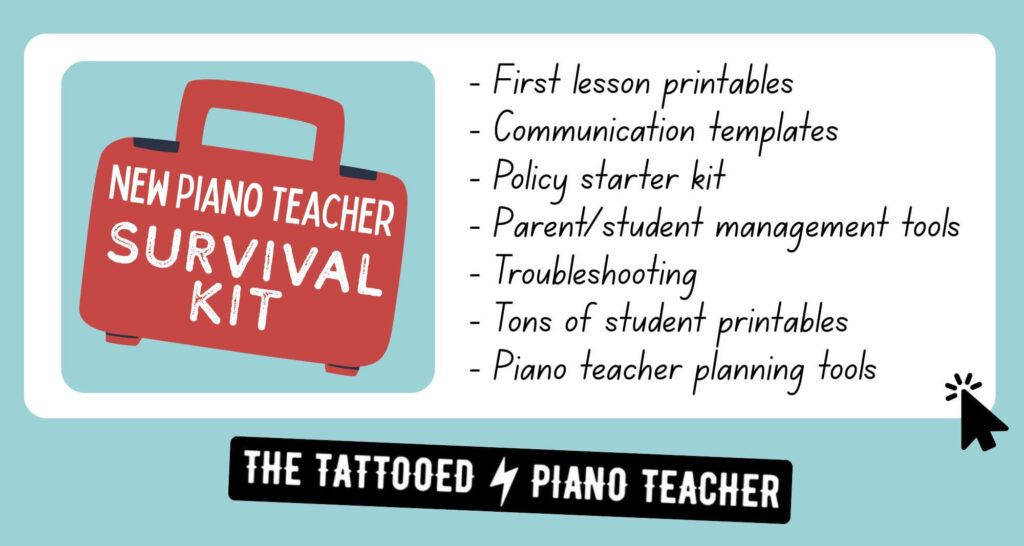
This comprehensive kit is everything I wished I had when I started. There’s nothing else like this out there! In the kit, I cover everything from picking method books to writing your policies to how to plan out a lesson.
Join the Membership
The YouTube channel has lots of free videos to guide you every step of the way. Join the membership for extra content (including in-the-studio footage of me teaching lessons and teacher deep dives) and perks.
Free 30-day Challenge: Start Your Studio
Start the free email challenge
If you haven’t taught that first lesson yet, this 12-step free email challenge will get all of those logistic thing set up so you hit the ground running. We cover your studio website, MyMusicStaff set-up, and much more.