You point to a random note on the staff and ask:
“What note is this?”
And your student just… stares at you.
Not because they’re being difficult. Not because they haven’t practiced. And not because you’re a bad teacher.
They’ve probably done the flashcards. They’ve probably completed the note speller pages. They may even be able to explain guide notes perfectly.
And yet, when faced with one lone note floating on the staff, they freeze.
If you’ve experienced this in lessons, you are definitely not alone.
Recently on YouTube, I went deep into the world of guide notes (also called landmark notes), intervallic reading, and alternative approaches to beginner note reading. And honestly? The conversation in the comments has been fascinating because piano teachers seem to have VERY strong opinions on this topic. 😂
So let’s talk about it.
What Are Guide Notes in Piano?
Guide notes are essentially anchor notes students memorize so they can orient themselves on the staff.
Typically, students learn:
- Middle C
- Treble G
- Bass F
Then later:
- Treble C
- Bass C
- Treble F
- Bass G
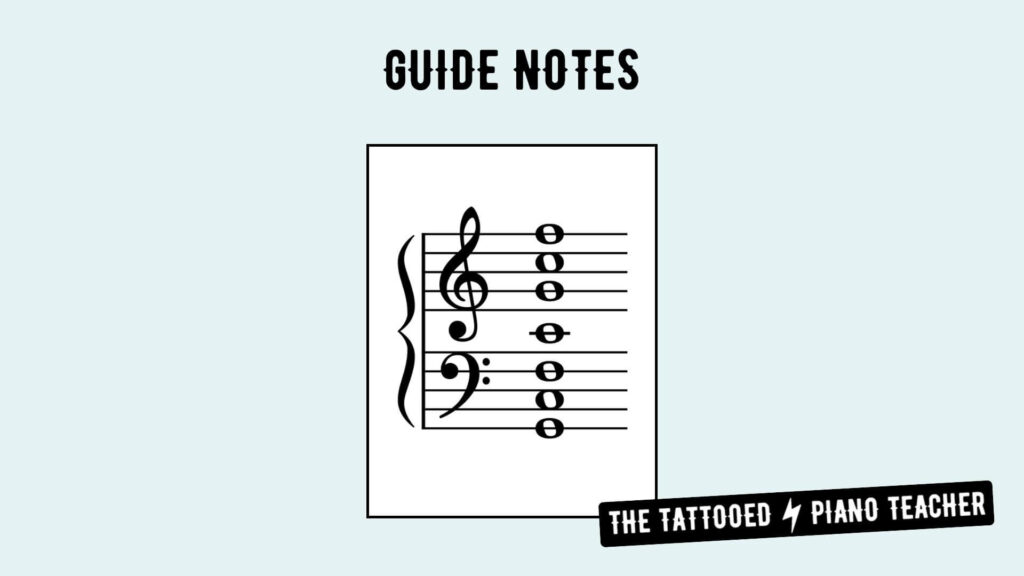
The idea is simple: instead of memorizing every note on the staff individually, students memorize a handful of important notes and figure out surrounding notes from there.
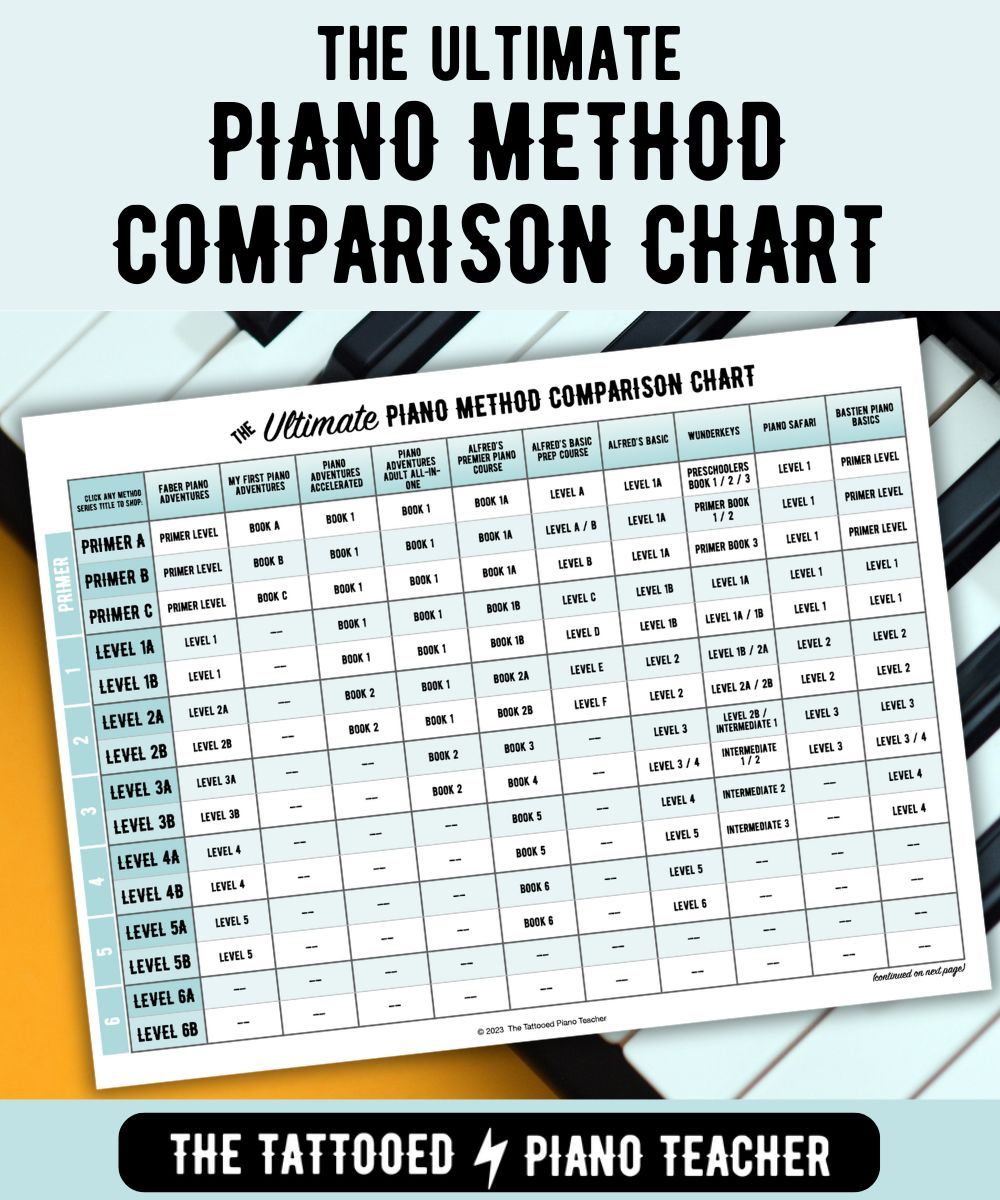
Most major piano methods use guide notes in some form, including:
- Piano Adventures
- Alfred’s Premier Piano Course
- Bastien New Traditions
- Piano Safari
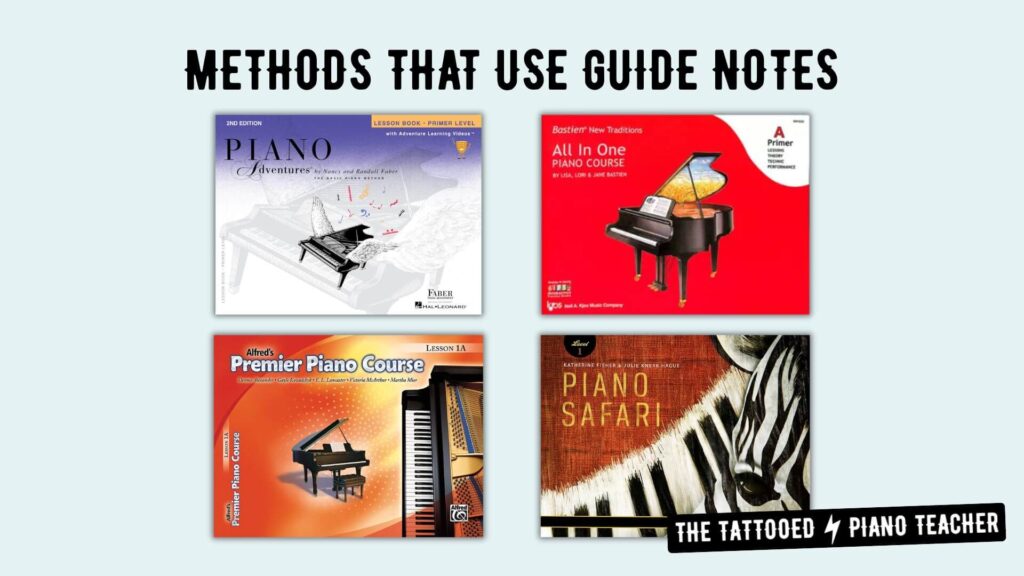
Guide notes became especially popular in piano pedagogy during the mid-20th century and are now deeply embedded into many mainstream methods.
Why Guide Notes Work for Some Piano Students
To be fair, guide notes absolutely can work.
I’ve seen plenty of students latch onto them quickly and become strong readers.
Students Who Often Thrive With Guide Notes
Guide notes tend to work especially well for:
- older beginners
- analytical thinkers
- strong memorizers
- students who enjoy systems and rules
For these students, guide notes provide:
- orientation on the staff
- visual anchors
- a logical starting point
Some students memorize Treble G once and never forget it again.
Why Some Students Struggle With Guide Notes
Here’s what I started noticing after teaching for over 20 years:
Some students could absolutely explain guide notes… but still weren’t becoming fluent readers.
They could slowly work out the first note of a piece. They could complete a theory page. They could tell me where Bass F lived if they had enough time to think about it.
But fluent reading? Not quite.
Younger Beginners and Spatial Processing
Younger students especially seemed to struggle with guide notes that lived inside the staff. The farther inward the note was, the more abstract it became for them.
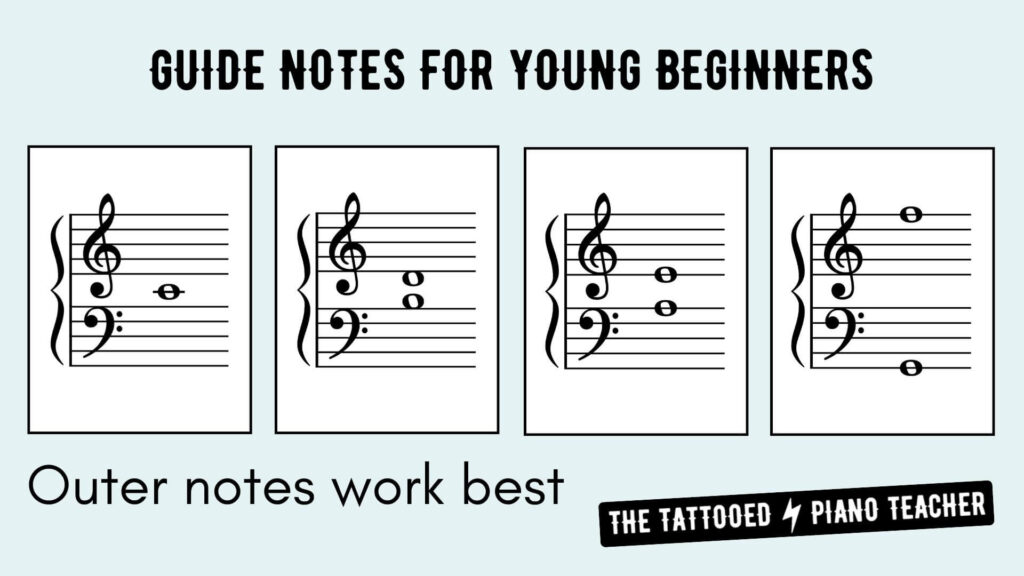
Meanwhile, notes on the edges of the staff:
- D
- B
- bottom line E
- top line A
…often seemed easier for younger beginners to recognize.
That observation completely changed how I think about note reading.
Intervallic Reading vs Guide Notes
Because the more I taught, the more I realized that reading music isn’t really about memorizing isolated notes.
It’s about pattern recognition.
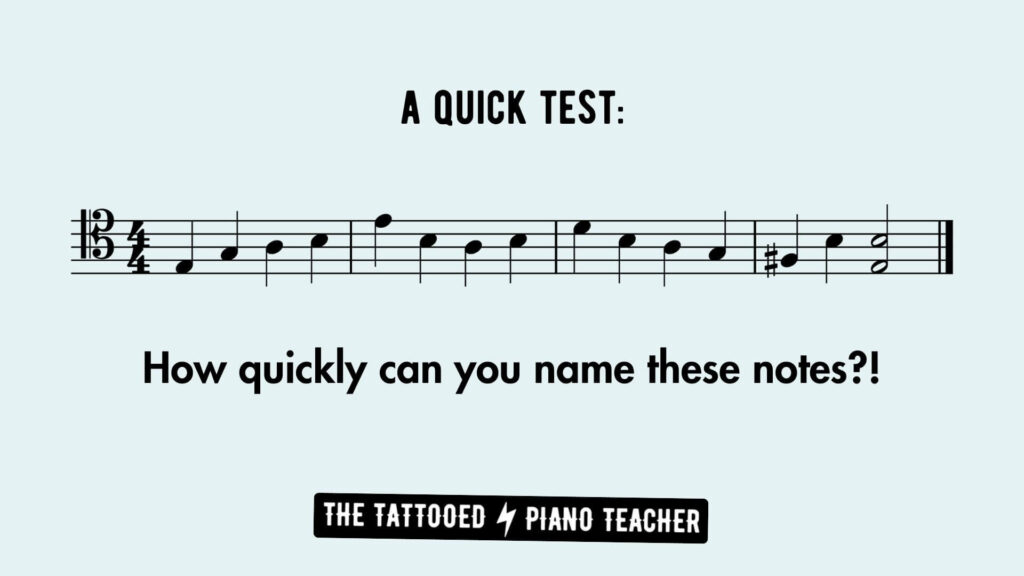
Think about how you would react if someone handed you a melody in tenor clef and told you to name every note under pressure in five seconds. 😅
Most of us would:
- Panic a little
- Figure out one note
- Read the rest by pattern
That’s intervallic reading.
And honestly, I think that’s how musicians naturally read when notation isn’t fully automatic yet.
Guide Notes Help Students Orient Themselves
Which is why I no longer see guide notes as “the way students learn to read.” I see them more as orientation tools. Helpful starting points. Little anchors on the staff.
But the actual reading happens through:
- patterns
- direction
- intervals
- contour
- visual relationships
That distinction completely changed the way I approach beginner instruction.
Alternative Beginner Piano Reading Approaches
And it also changed the types of method books I started gravitating toward.
Some methods still rely heavily on guide notes from the very beginning. Others take a much more step-wise or pattern-based approach.
Piano Skill Set
Piano Skill Set is my own authored method book series. The Pre-reading and Primer levels are complete, and Levels 1A-3B are in the works.
Piano Skill Set Writing and Technique books use:
- step-wise note introduction
- pattern recognition
- interval awareness
Students begin with Middle C and gradually branch outward one note at a time.
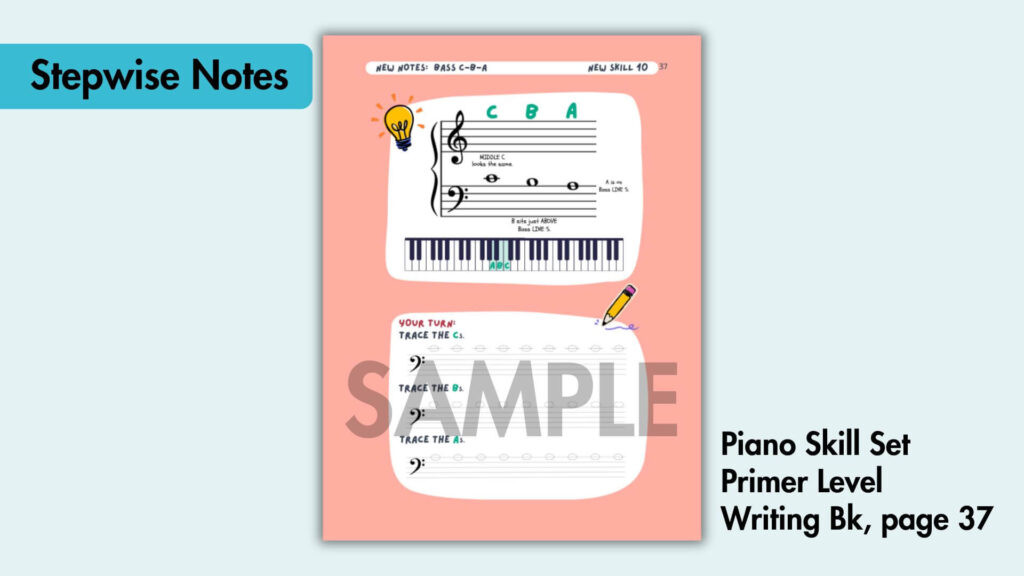
Instead of memorizing scattered landmark notes across the staff right away, students learn relationships between notes gradually while constantly reading patterns.
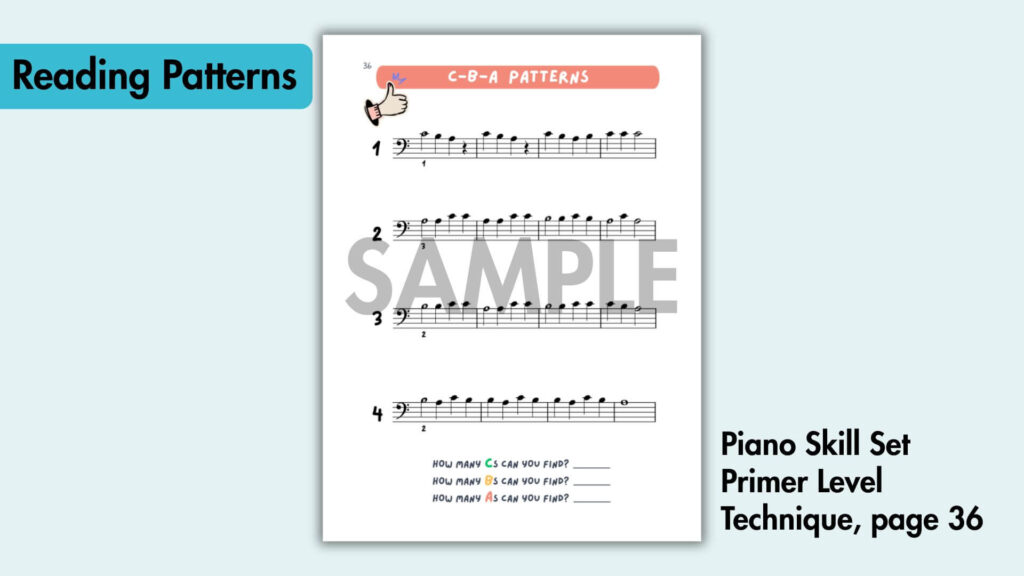
Shop Piano Skill Set books here (on my website).
WunderKeys
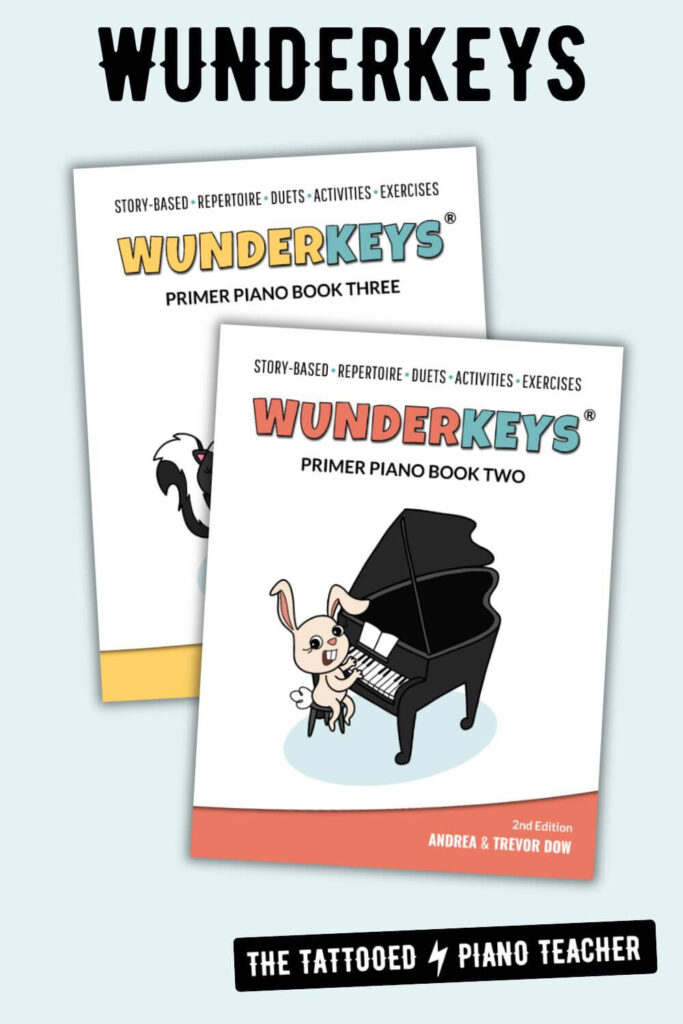
WunderKeys is a truly unique approach for beginners and worth checking out. I have a full review of the WunderKeys books here.
WunderKeys takes a mostly step-wise introduction approach and uses lots of visual note relationships and memorable note “hints” for younger kids.
Instead of introducing scattered guide notes across the staff early on, similarly to Piano Skill Set, students begin at Middle C and gradually branch outward one note at a time.
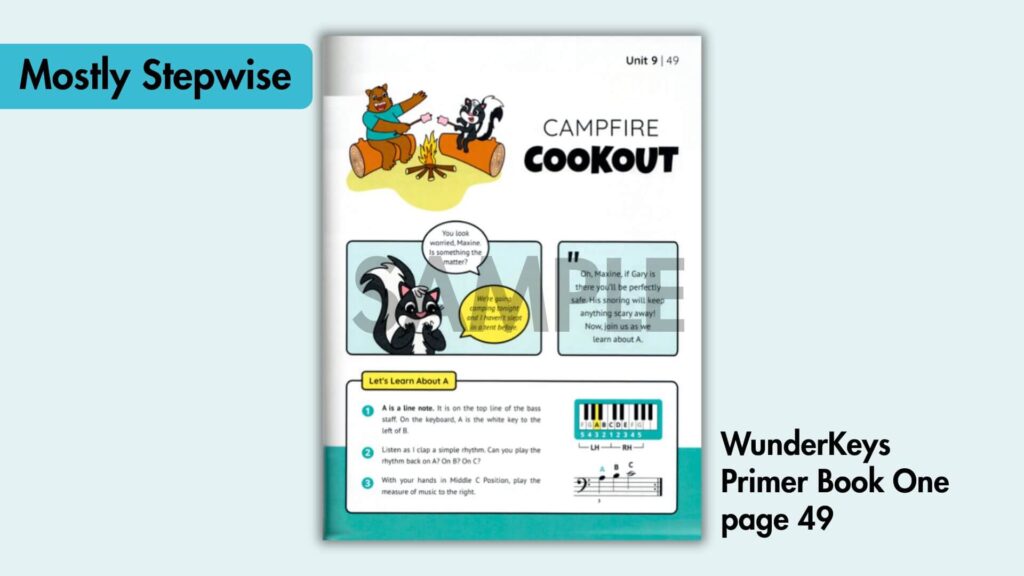
The method also emphasizes visual relationships between notes, helping students recognize patterns and staff direction more naturally.

Piano Safari
Piano Safari blends limited guide notes with heavy intervallic reading. I have a full review of Piano Safari books here.
Students only learn a few landmark notes early on, but they’re exposed to the full staff almost immediately.
Rather than memorizing every individual note, students are encouraged to read by contour, intervals, and visual patterns.
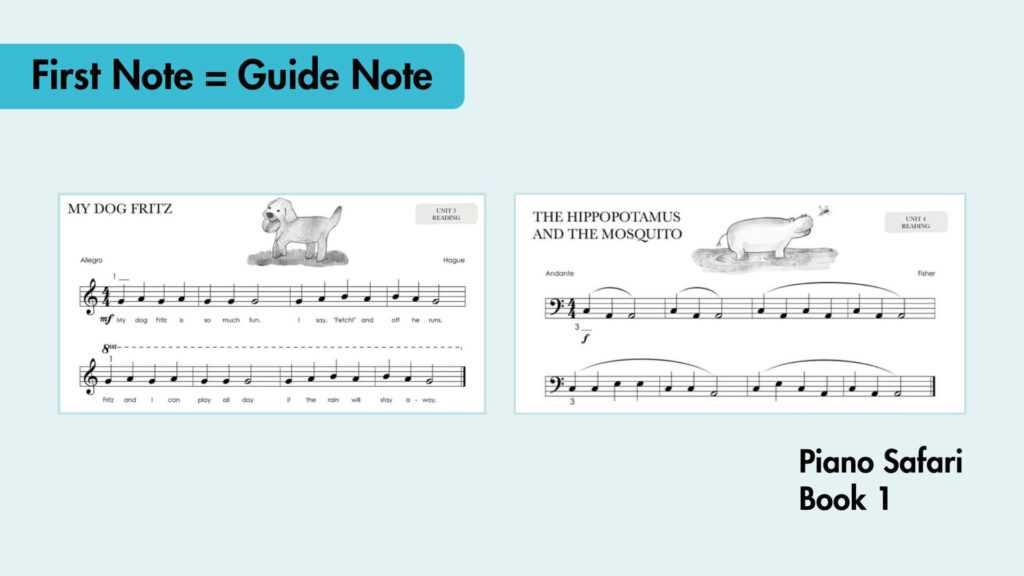
Many pieces are also taught partly by rote, allowing students to experience full, musically satisfying pieces before they can technically identify every note on the staff.
Piano Safari teaches fluent note reading using a unique blend of:
- contour
- intervals
- pattern recognition
- rote learning
Piano Pronto
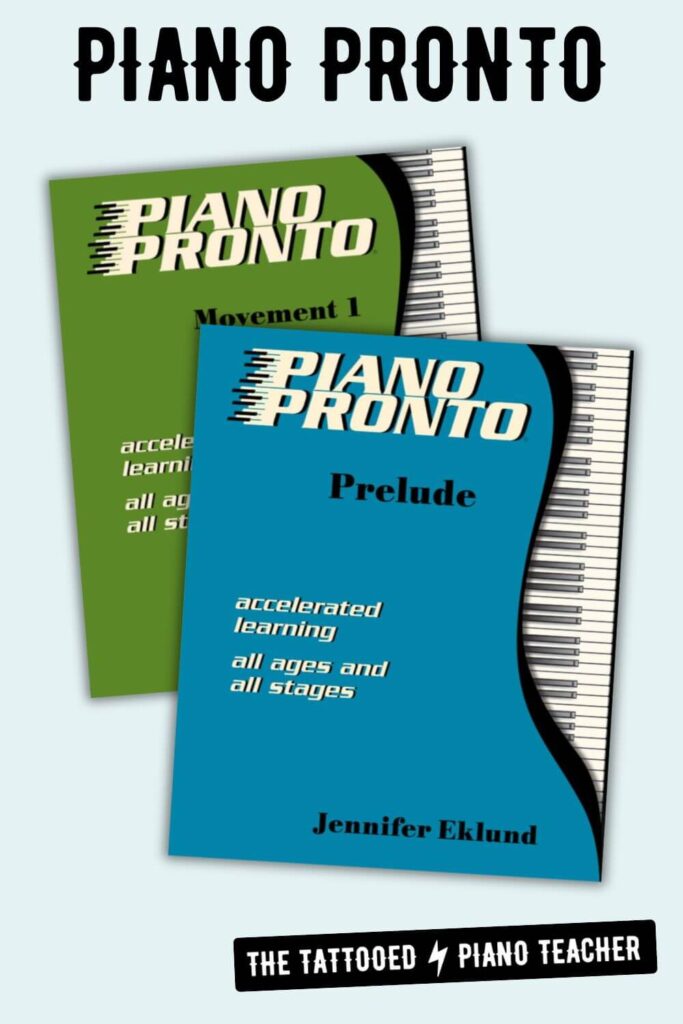
Piano Pronto takes more of a “learn the notes you need for the song” approach. I have a full review of Piano Pronto here.
Rather than strictly following a guide-note sequence, new notes are often introduced organically as they appear in upcoming repertoire.
The method tends to prioritize getting students playing full, engaging pieces quickly while gradually expanding their note-reading range along the way.
But at the very beginning of the note-reading journey (in the Prelude level books – equivalent to Primer level), students are shown all five notes of the treble C Scale right away.
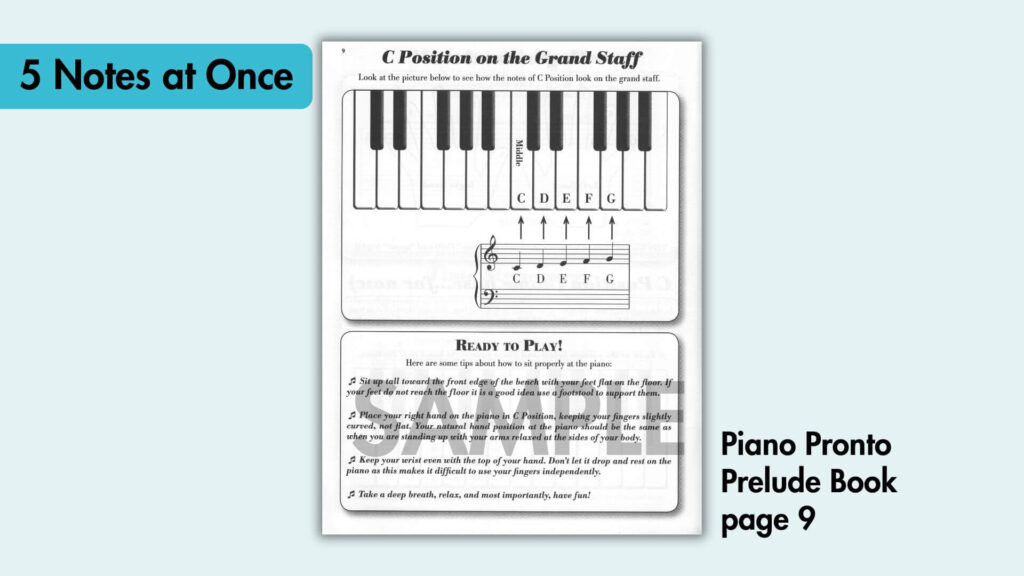
From there, Piano Pronto takes a “project-based” approach, teaching whatever notes or skills are needed for the next song. And Piano Pronto books are unique in that almost every song is a familiar tune.
My Current Philosophy on Guide Notes
At this point, I’m not anti-guide-note. I just no longer believe they are the entire answer.
For younger beginners especially, I now prioritize:
- pattern recognition
- directional reading
- step-wise note introduction
- intervals (starting with steps vs skips)
- visual relationships
And I use guide notes more as:
- orientation tools
- starting points
- reference notes
rather than the main focus of reading instruction. Because every student processes information differently.
And sometimes the issue isn’t that a child “can’t read notes.” Sometimes they simply need a different approach.
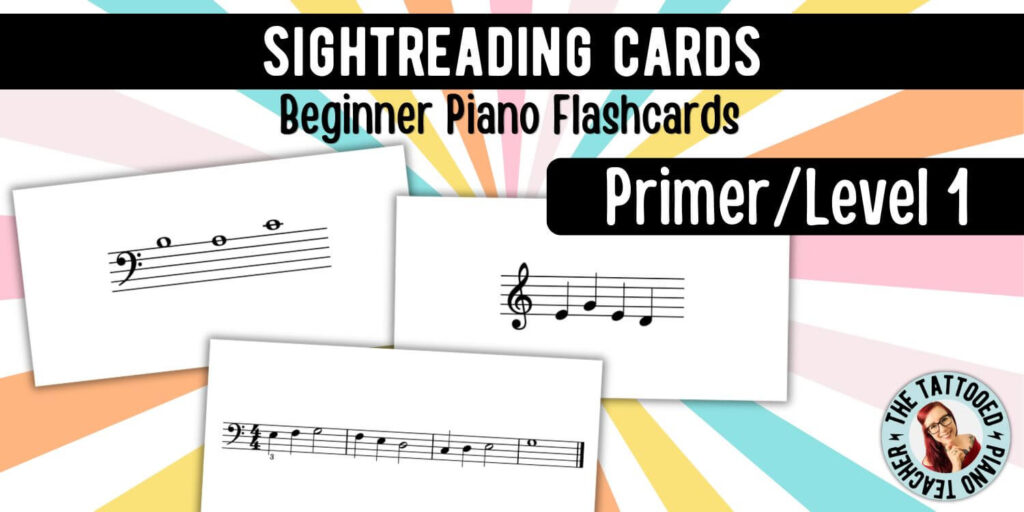
For these students, more flashcards aren’t the answer. More notespeller pages aren’t the answer. Try introducing note drilling by pattern! Present a series of notes on the staff rather than just one random note [check out my printable Sightreading Cards here].
Final Thoughts on Guide Notes and Piano Reading
If guide notes are working beautifully for your students, that’s wonderful. Truly.
But if you’ve ever had students who:
- freeze on flashcards
- struggle to memorize random staff notes
- read slowly despite “knowing” the notes
…it may be worth exploring a more pattern-based approach alongside your current method.
One thing I’ve personally found helpful, especially with younger beginners, is emphasizing notes on the outskirts of the staff first before expecting students to quickly recognize notes buried deep inside the treble and bass clefs. Middle C, edge notes, directional reading, and pattern recognition often feel much more intuitive to little learners than isolated “floating” notes.
And regardless of whether you use guide notes heavily or lightly, I’ve found that consistent visual review makes a HUGE difference. Drawing guide notes on a blank staff, recognizing patterns between notes, and practicing notes in context instead of isolation can all help students become more fluent readers over time.
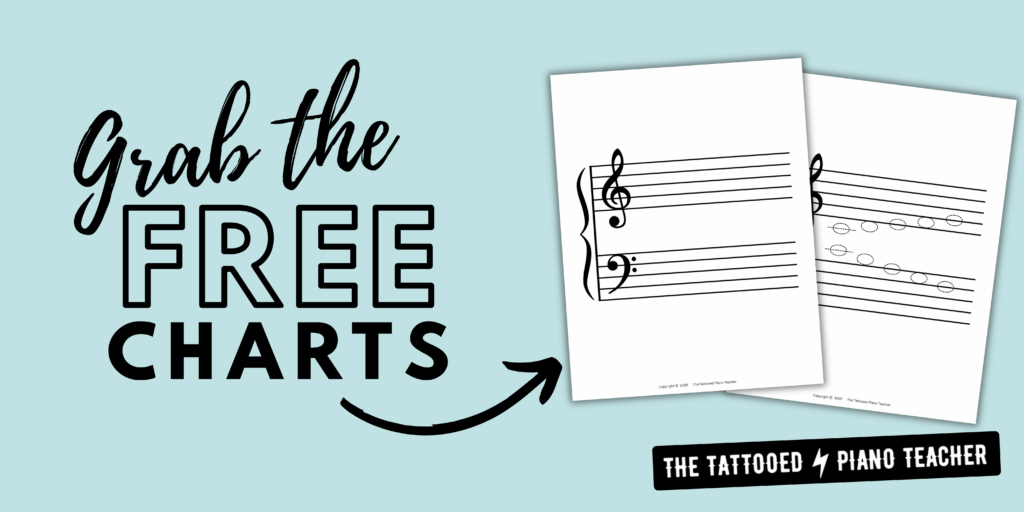
If you’d like some tools to help with that process, you can grab my free Grand Staff Posters in the online store. They’re great for weekly guide note review and helping students visually orient themselves on the staff.
And if you’re looking for a more pattern-based approach to note recognition, my printable Sightreading Cards were specifically designed to help students recognize notes in context rather than only identifying one isolated note at a time.