If you’re searching for piano summer camp ideas, chances are you’re also wondering what your studio is going to look like in June, July, and August.
Students travel, schedules get messy, and lessons start to drop off.
I used to stress about that every single year until I realized something…
Summer doesn’t have to be a slower season.
Summer can actually be one of the most creative and profitable times in your studio if you offer the right kinds of programs.
If you’re looking for summer piano camp ideas, workshop ideas, or just something to keep students engaged without relying on weekly lessons, here are some of the most successful things I’ve done.
Why Composition Works So Well in the Summer
A while back, I asked my students what they really wanted to do with piano.
Not what we think they should want. Not “play in a recital” or “learn scales faster.”
I gave them options like performing on stage, starting a YouTube channel, playing in a band…
And the overwhelming answer was
“I want to compose my own music.”
That changed everything for me.
Because composition isn’t just another activity. It’s something students are actually excited about. And that makes it perfect for summer when motivation can be hit or miss.
Option 1: Host a Composition Boot Camp (High Impact, High Income)
If you want something that feels like a true summer experience and brings in serious revenue, this is it.
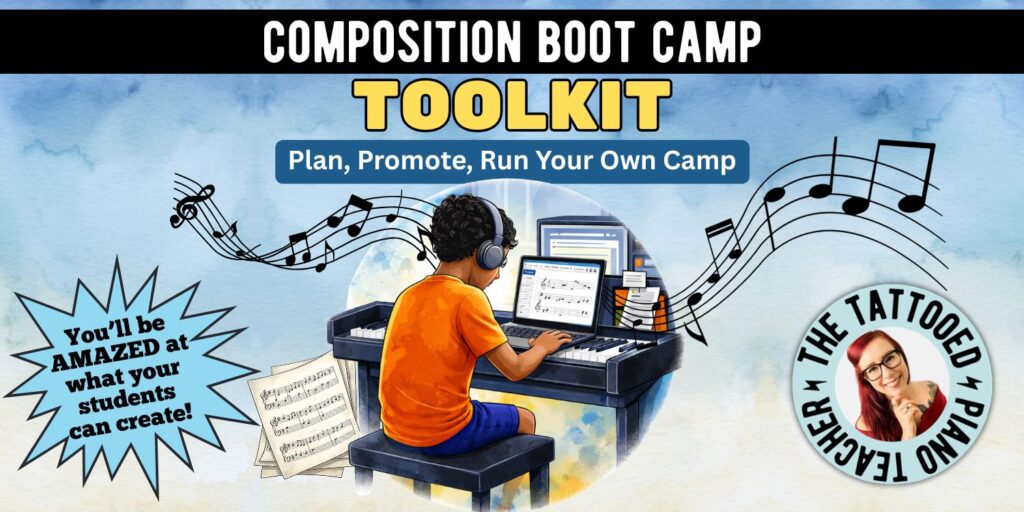
I run a Monday through Friday composition camp where students come for several hours a day and work on original music all week.
Each student has their own setup
keyboard, headphones, laptop, workspace
and they spend most of the time creating.
I’m not standing at the front lecturing. I’m circulating, guiding, troubleshooting, encouraging.
By the end of the week, students walk away with:
- Multiple original compositions
- Professionally notated and printed music
- A recording of their work
- A level of pride you just don’t get from a typical lesson
And yes, you can charge hundreds per student for something like this.
Parents see the value immediately. Students talk about it all year. And many come back the next summer asking for it again.
Running a full-week composition camp works best with students age 10 or 11 and up, and late elementary to intermediate level. Because of the way students work independently on their laptop and keyboard with headphones, you definitely want them to have some piano experience under their belt before sign up for something like this.
If you want a done-for-you version of this, this is exactly what my Composition Boot Camp Toolkit is designed for. It takes all the guesswork out so you’re not wondering what to do for five hours a day.
Option 2: Run a Multi-Week Composition Class
Not ready for a full camp? Totally fair.
A four-week summer class is a great middle ground.
One of my favorite ways to do this is with a structured, step-by-step composition process that removes the overwhelm for students.
Instead of saying “go write a song” and getting blank stares, you guide them through choices:
- choose a melody idea
- choose a left-hand pattern
- combine sections into a full piece
Students essentially build their piece piece-by-piece, and the results are surprisingly good.
This works especially well for:
- mixed levels
- students who like structure
- students who want to be creative but don’t know where to start
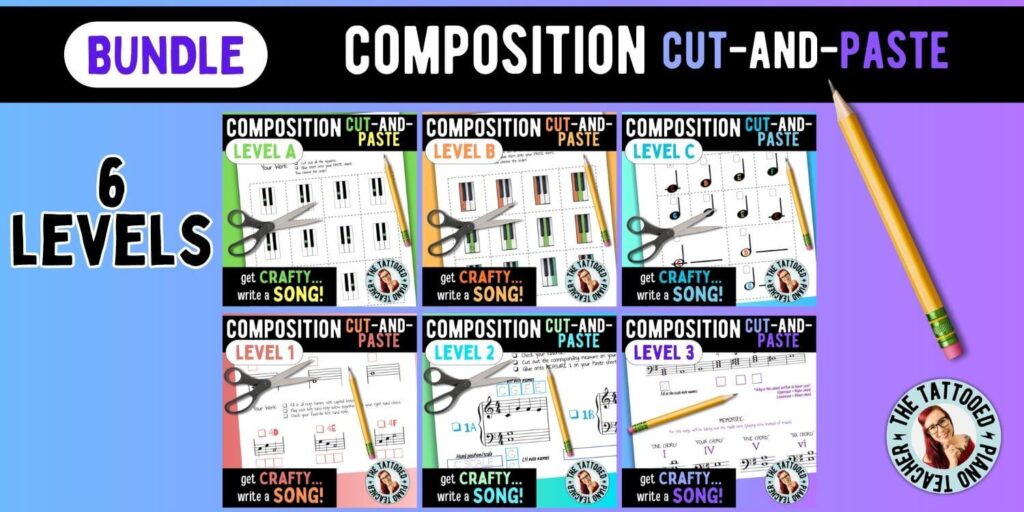
That’s exactly the idea behind my Composition Cut and Paste resources. It turns composing into something approachable instead of intimidating.
I created this curriculum to work for Pre-Reading (like very, very beginners) through Intermediate students of all ages! In fact, you can even run a multi-level class with a mix of age and experience to make the most of your time.
Check out any individual level or save with the bundle of Composition Cut-and-Paste Workbooks.
Option 3: Offer a One-Day Workshop (Low Prep, Easy Win)
If your schedule is packed or you just want something simple to test, a one-day workshop is perfect.
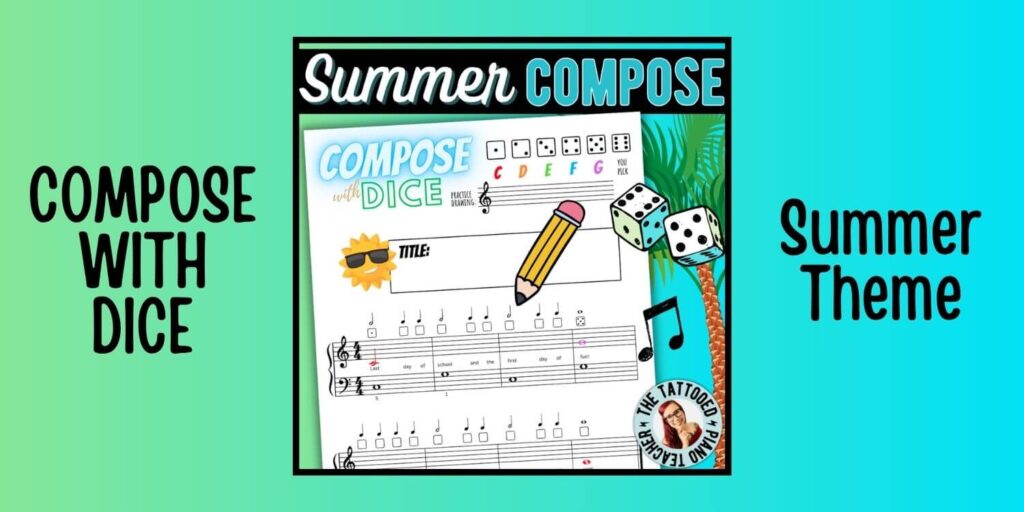
One of my go-to options is a dice-based composing activity.
Students roll dice to determine notes, then build a melody from what they get.
It sounds random, but it works incredibly well.
Why?
Because it removes the pressure.
For students who say
“I don’t know what to write”
or
“I don’t care”
…now the dice are doing the choosing.
And suddenly they’re engaged.
This kind of workshop is:
- great for early-readers (Primer to Level 2)
- easy to run with mixed age groups
- flexible in length
- doable even without tons of pianos
If you want something quick, fun, and effective, Compose with Dice is where I’d start.
I have a summer-themed pack, or Compose with Dice is available in 10 different seasonal themes.
Option 4: Studio-Wide Competition to Drive Engagement
If you want something that brings your whole studio together, consider running a studio-wide event.
Something like a friendly competition or challenge can:
- boost motivation
- increase practice
- create excitement during a slower season
- bring in additional income
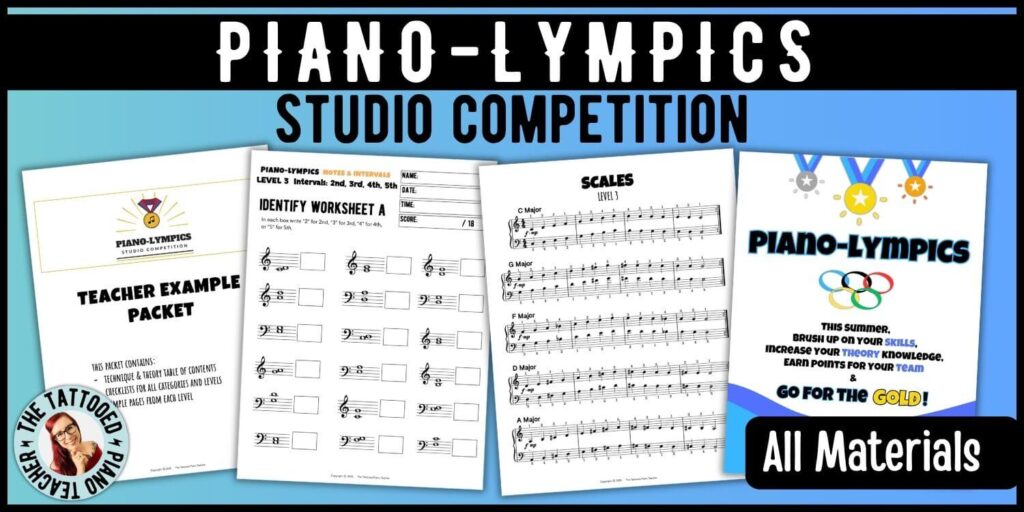
Every other year, I run a 8-week studio Olympic-themed competition. Students choose a technique and a theory event to focus on for the summer.
Curious about how a studio competition works? I made a video about it!
If you want to see your students want to play their scales and beg to do a theory worksheet–welcome to the magic of the Piano-lympics Studio Competition!
I created a done-for-you Piano-lympics Toolkit and Course so any teacher can replicate the success of this event without starting from scratch.
Option 5: Add Activities Into Regular Lessons
If you’re not doing camps or classes at all, you can still bring extra fun and creativity into your studio.
You just need a starting point.
And I have a ton of engaging games, activities, and worksheets to choose from–all levels, all theory topics.
Add Composition to Piano Lessons
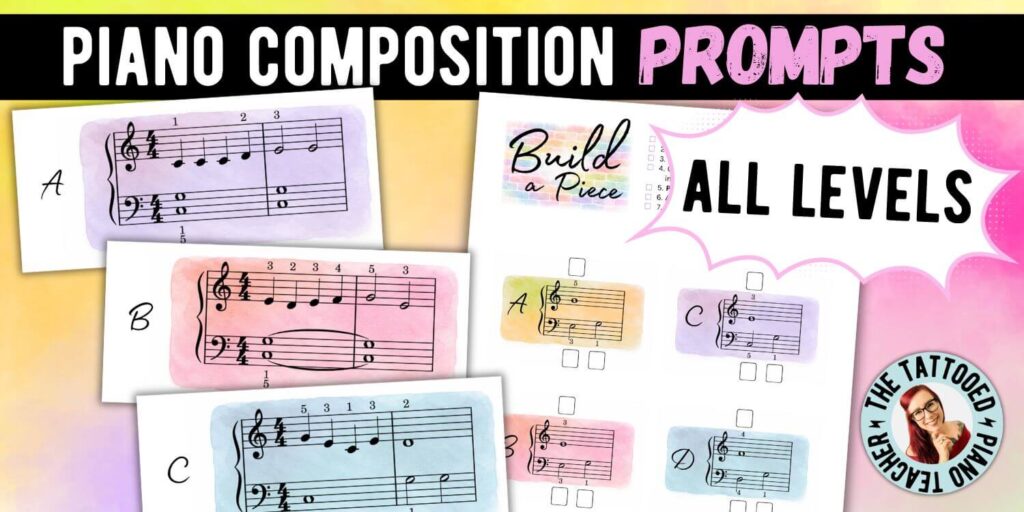
One of the easiest ways to get students composing is giving them a short musical idea and asking them to continue it.
A few measures that feel unfinished
something that “wants” to go somewhere
And then letting them take it from there.
Some students will write four more measures.
Some will turn it into a full piece.
Either way, you’ve opened the door.
This is exactly what my Composition Prompts are designed for. They give students just enough structure to get started, without boxing them in.
There’s an activity pack for every level from early readers to intermediate students. Or save by buying the bundle.
Add Games to Piano Lessons
I use Bingo-style games all the time in the summer.
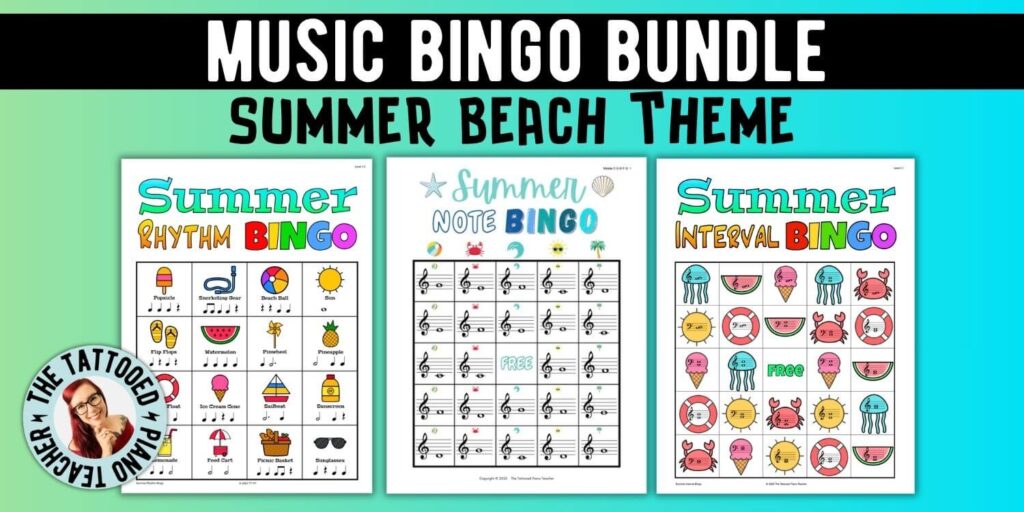
I have Rhythm Bingo, Note Bingo, and Interval Bingo, all in multiple levels and all with a summer theme.
The best part is how flexible these are.
You can play:
- teacher vs. student in a private lesson
- partner-style in a shared lesson
- small group if you’re doing summer group classes
And suddenly, something that would normally feel like drill work turns into something students actually look forward to.
It keeps skills fresh without that “we’re doing theory in the summer” energy. And it gives you an easy way to add variety without reinventing your entire schedule.
I even use “game time” as a reward for meeting practice goals using my Goal Setting Practice Record Book.
Although, I have these bingo games in multiple seasonal sets, here are the 3 variations in a Summer Theme (save with the Summer Bingo Bundle).
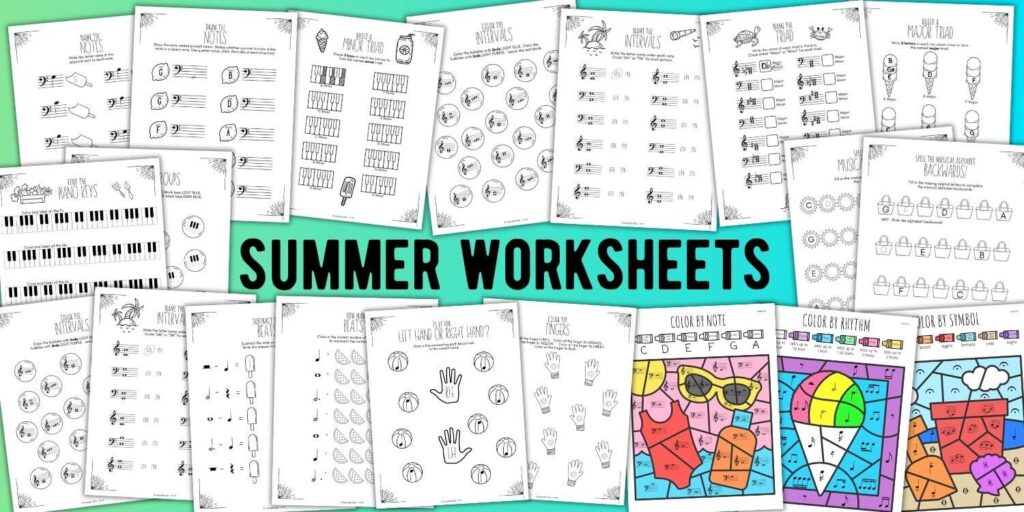
Add Worksheets to Piano Lessons
Theory books can get a little dry after a while.
If you assign theory pages only to have them come back unfinished week after week, why not try something new? I can’t explain it, but there’s something magically motivating about a worksheet printed just for them.
- Print out a single worksheet to review a specific topic.
- Choose a fun activity related to a relevant theory topic (that feels more like a game than an assignment).
- Or create a booklet or binder of summer theory worksheets.
Reward worksheet completion and set a goal for the summer months.
One year I even did a Theory Challenge making it a studio-wide competition with prizes to see who could complete the most theory pages over the summer.
And if student enrollment over the summer is your concern, pose a challenge before summer begins. Give students a reason to stay!
I have a ton of music worksheets to choose from. Narrow the search by theory topic on my website.
But if you need a starting point, here are some summer-themed Music Theory Worksheets.
Don’t Forget: Summer Doesn’t Have to Mean Lost Income
This is the mindset shift that changes everything.
Summer is only stressful if your only offer is weekly lessons.
The second you add:
- camps
- workshops
- short-term classes
- creative projects
…you’re not relying on lesson consistency anymore.
You’re creating new reasons for families to stay engaged.
Putting It All Together
You don’t have to do all of this.
Pick one.
Start simple.
Even one well-planned summer offering can:
- keep students engaged
- give families a reason to stay connected
- replace (or exceed) your usual lesson income
And once you see it work, you’ll never look at summer the same way again.
If you’re ready to make this easy on yourself, you can grab the done-for-you resources here:
- Composition Boot Camp Toolkit
- Piano-lympics Toolkit
- Composition Prompts
- Compose with Dice